



One year later with Dr Rishabh Ghotge on TCO and electric truck readiness
Last year, I spoke to Dr Rishabh Ghotge from Cenex NL about the challenges facing fleet operators as they move towards electric HGVs. Our conversation covered total cost of ownership (TCO), grid access and the lessons that the UK and the Netherlands could learn from each other.
One year on, I caught up with Rishabh again to hear what has changed. We discussed energy prices, new truck manufacturers entering the European market, the development of public and shared charging, and the continuing challenge of securing grid connections. Below is our follow-up conversation.
Read our interview from last year.
Joanna: How has the financial case for electric HGVs changed over the past year?
Rishabh: Of course, the elephant in the room over the past year has been the energy crisis and the sharp rise in prices due to international affairs – that is a clear change from when we last spoke.
Something else that has changed is the growing presence of Chinese truck manufacturers in the European market. Perhaps we are not seeing all of that on the ground yet, but people are talking about it a lot, this was evident at IAA in Hanover this year.
There are manufacturers stepping into Europe with high-quality products that are ready to sell. This is a market that has traditionally been dominated by European truck manufacturers, and I think those established manufacturers are worried about the difference in cost.
There was also discussion at IAA about hydrogen and the commitment some truck manufacturers are making to it. What are your thoughts on that?
Rishabh: I think some manufacturers may be worried about their position because they realise they were late to battery manufacturing.
I am a bit sceptical because the cost and fuelling infrastructure still raise questions. My suspicion is that some are trying to diversify and buy themselves more time. If they go all out on price competition in the battery-electric market, they may not be in the strongest position.
Last year, we discussed the TCO tool that Cenex had developed. Have you seen more interest in it over the past year?
Rishabh: I recently looked through the website statistics, and what really stands out is the interest we see when we go to events and talk to people about the tool. I have been to several events where people were keen to try it. They followed the QR code and visited the website.
There is a lot of interest in the fact that the tool exists. However, not everyone who visits the initial page goes on to start using it. From the statistics I looked at, I think roughly 80% only visit that first page, while around 20% continue. The numbers then drop further as people move through the different stages.
So there is interest, but to get the most out of the tool, people need to keep going through the process.
How does that process work, and what are you learning about the people who use the tool?
Rishabh: The tool follows a step-by-step approach. The first stage helps you assess which electric truck would best meet the duty cycle you have in mind. The second looks at planning the charging infrastructure for the truck you have chosen. The third covers the financials, and the fourth brings everything together in a summary.
You put in some data, get some results and then move on to the next stage. It is a bit like a game, where you go to the next level, but you need to play through to the end.
What we do notice is that some people spend a lot of time on it. The statistics showed an average time of about half an hour, which is a lot for a webpage. If someone is spending that long with it, they are deeply engaged.
However, when you look at how many people make it through each step, the numbers narrow down quite quickly. We can see how people use the tool, but unless they tell us exactly what value they get from it, there is only so much we know.
Our suspicion is that there are a few highly engaged users who use it a lot, while the majority are pleased it exists, try it out and then drop off quite quickly. That is what we suspect from the statistics, rather than something we can say for certain.
How much of that interest comes from attending events and speaking to people directly?
Rishabh: We can see a clear peak in activity every time we go to an event, followed by a drop-off. The strongest engagement tends to be in the weeks afterwards, or perhaps up to a month after the event.
Outside those periods, people do not necessarily know the tool exists. They are not really finding it through internet searches, so there is a lot to be said for active marketing and making sure people know it is available.
Last year, we also discussed gaps in knowledge around electrification. How important is it for fleet managers and senior leaders to attend these events and speak to people who can help?
Rishabh: Active engagement is really important. People need to learn how the technology works, but also how the wider ecosystem and the financing work.
There is only so much someone can get from an online tool. There are limits to how much they engage with it and how much they can learn from it. There is also a trust gap.
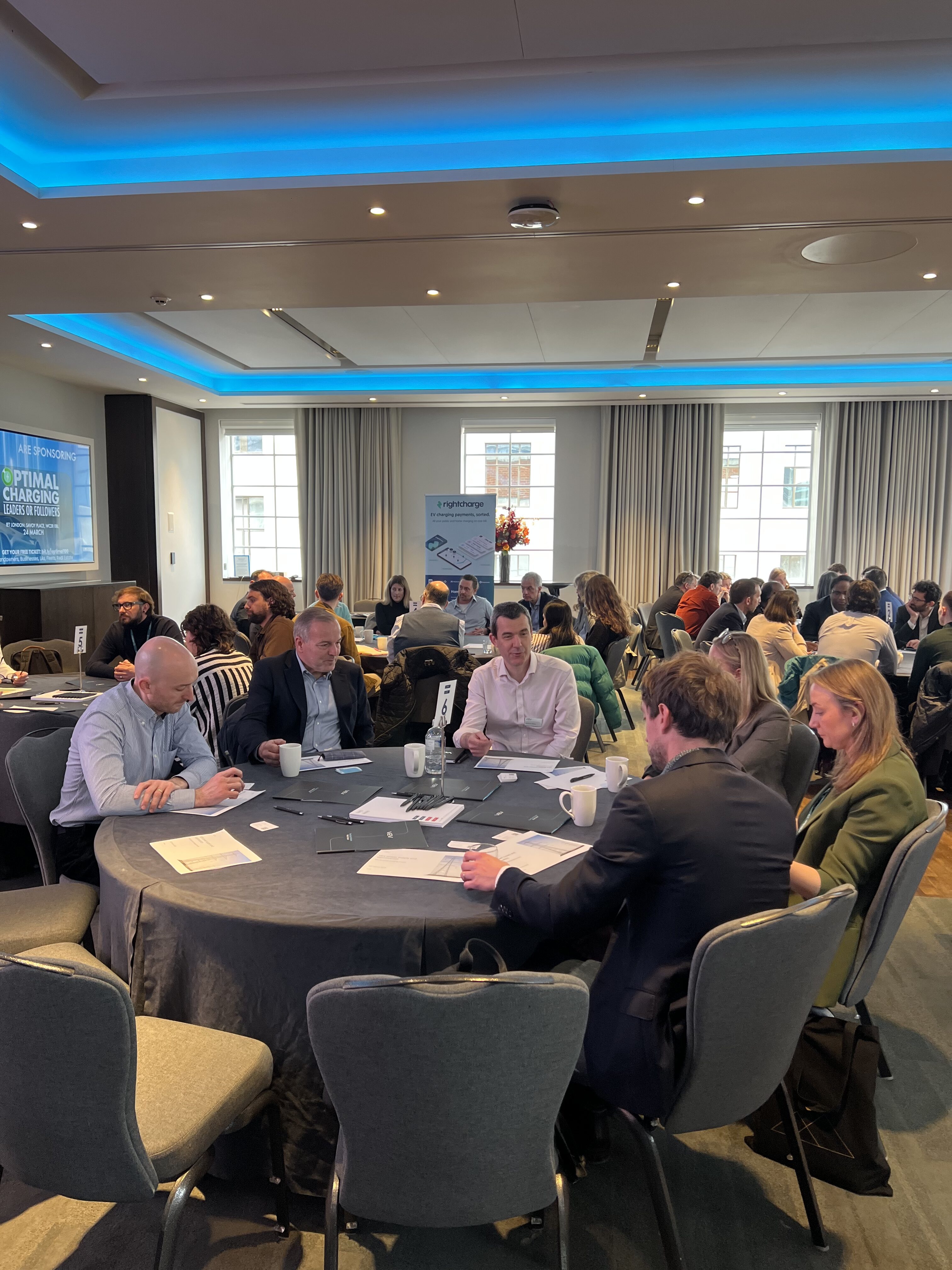
When you go to an event, you can see the technology in practice, speak to experts, try things yourself and watch demonstrations. You can discuss the financials and hear about the experiences of other companies that have already been through the same process.
That is absolutely essential to get the ecosystem moving. Events such as IAA and the industry events we have been discussing in the UK and the Netherlands are really important.
What barriers are operators bringing to you now? Grid connections, payload and range are still concerns. Are there more ways to work around these challenges?
Rishabh: The main barriers are still quite similar. The upfront cost of an electric truck remains high, at around two to two-and-a-half times the cost of a diesel equivalent, and getting a grid connection is a major challenge in the Netherlands.
One view you hear in the Dutch industry is that we talk about grid congestion more, and we make it very visible through the capacity maps. That makes it particularly clear in people’s minds.
However, the same problems exist elsewhere, including in Germany, the UK and places such as San Francisco. The way the different actors are organised, how the issue is mapped and how much people discuss it can all affect how visible it is. It is certainly not only a Dutch problem.
One thing that has developed is the range of charging options. Companies such as Milence are coming in strongly with plans for high-power public charging stations. Those networks are developing, whether through high-power CCS charging or the Megawatt Charging System, MCS.
There is also more discussion about new Chinese truck models with fast-charging capabilities, expected to arrive alongside that infrastructure.
In the past, the conversation was very much “depot, depot, depot”. Depot charging remains the main focus because that is generally where you can get the lowest prices, have the most control and make the fewest changes to your operation. However, there is more acceptance that public charging will also have a role.
Depot sharing is starting to become more of a topic as well. You could have charging infrastructure at a shared depot used by several companies. Or, when your trucks are away from base, you could charge at another operator’s depot at a lower cost than a public charging station. These are becoming better-known options that people are actively discussing.
We are also hearing more about business-to-business charging at depots. Sharing infrastructure could help lower TCO over time and create an additional revenue stream. Does that suggest more confidence in the direction of travel?
Rishabh: Yes. The fact that people are looking for workarounds tells you that they are clear about the direction. They are trying to work out how to get there at the lowest cost.
What about solar charging and microgrids at depots? Are you seeing more of that in the Netherlands?
Rishabh: It depends very much on the site. Trucks require huge amounts of energy, so covering a couple of warehouses with solar panels helps, but it may only meet a limited part of the demand.
What is starting to make a lot of sense is having a truck charging depot close to a large solar park. The two may share a cable, or whichever was there first may already have a grid connection that the other can use.
You can then have an arrangement where one connects through the other before reaching the grid. The idea is to use as much of the solar energy as possible locally for charging.
It is not always happening in a planned way. It is not necessarily a case of saying, “We are charging trucks here, so let’s build a large solar park next door,” or, “We have a solar park here, so let’s put trucks beside it.” Sometimes the two parties simply find each other and realise there is an opportunity.
The financial case can be solid, but it is very specific to the location. It is not a model that you can easily scale or replicate everywhere.
Coming back to energy costs, the conflict over the past year has brought fuel-price volatility into focus. Is that also changing how policymakers think about electrification?
Rishabh: Policymakers are very aware of the impact of high fossil-fuel prices, but they are also thinking about it in terms of European security.
Europe imports a large share of its fossil fuels, which makes it vulnerable during a crisis. It already spends billions on those imports, and higher crude oil prices mean billions more being spent on top of that.
That is why terms such as “European resilience” are becoming part of policymakers’ vocabulary, and why they are making plans around it. The idea is that a more electrified Europe will also be less vulnerable to global shifts in fuel prices.
The hot weather over the summer has also made me reflect on the pressure on infrastructure and what businesses can do to help address climate change. Alongside that, are there other pressures on the grid that have become more prominent since we last spoke?
Rishabh: Yes, these issues have become much more front and centre. One other development is the demand for grid connections from AI data centres.
These can require connections that are orders of magnitude larger than those needed for truck charging, often at higher voltage levels. There is a sense of a scramble for power and for connections.
Data centres are often treated as critical infrastructure, and governments have to decide how to prioritise demand. That is a dynamic that feels much more prominent than it did when we spoke last year.
Grid connection delays remain a concern, although waiting times vary by location. What needs to change in how networks plan for future demand?
Rishabh: Yes, it does vary by location and by the network involved. There is a lot of discussion about anticipatory investment.
The idea is that network operators should understand where truck charging, or other major electricity demand, is likely to develop and plan for it in advance.
My sense is that much of this is still on paper. Moving to that way of working has not yet been fully implemented, and it could take a few years to put into practice.
++++
One year on, our conversation shows that progress is continuing, even as familiar challenges remain. Vehicle costs and grid access are still barriers, but the development of public charging and shared depot infrastructure is giving operators more options. As Rishabh highlighted, the direction is clear, and operators are increasingly focused on finding practical, affordable ways to make electrification work for their businesses.
Thank you to Rishabh for joining me again and sharing his perspective on the past year. It was interesting to hear how new vehicles, charging options and approaches to energy are developing, alongside the challenges that operators are still working to overcome.
For more about VEV and fleet electrification, visit vev.com.
If you’d like to speak to someone, then contact us at ask@vev.com
If you’d like to get in touch with Rishabh, then email him here:
Rishabh.ghotge@cenegroup.nl or on Linkedin at https://www.linkedin.com/in/rishabh-ghotge
Cenex (based in the UK and the Netherlands) is an independent not-for-profit offering research and consultancy services related to transport electrification. They offer expert advice and technical tools for fleet electrification, depot planning, electrification strategies, techno-economic modelling, charging infrastructure procurement, standards compliance and market assessments.