





Quick Summary
- Fleet electrification has moved beyond vehicle cost to a broader system challenge involving infrastructure, energy, policy, financing, and operations.
- Infrastructure – especially depot charging and grid capacity – remains the biggest barrier to scaling electrification.
- Total cost of ownership still matters, but only when it reflects real-world operations, energy strategy, and longer-term planning.
- Data and operational insight are critical, helping fleets identify where electrification works today and enabling phased, practical adoption.
- Policy certainty and cross-sector collaboration are essential to unlock long-term investment and support the transition at scale.
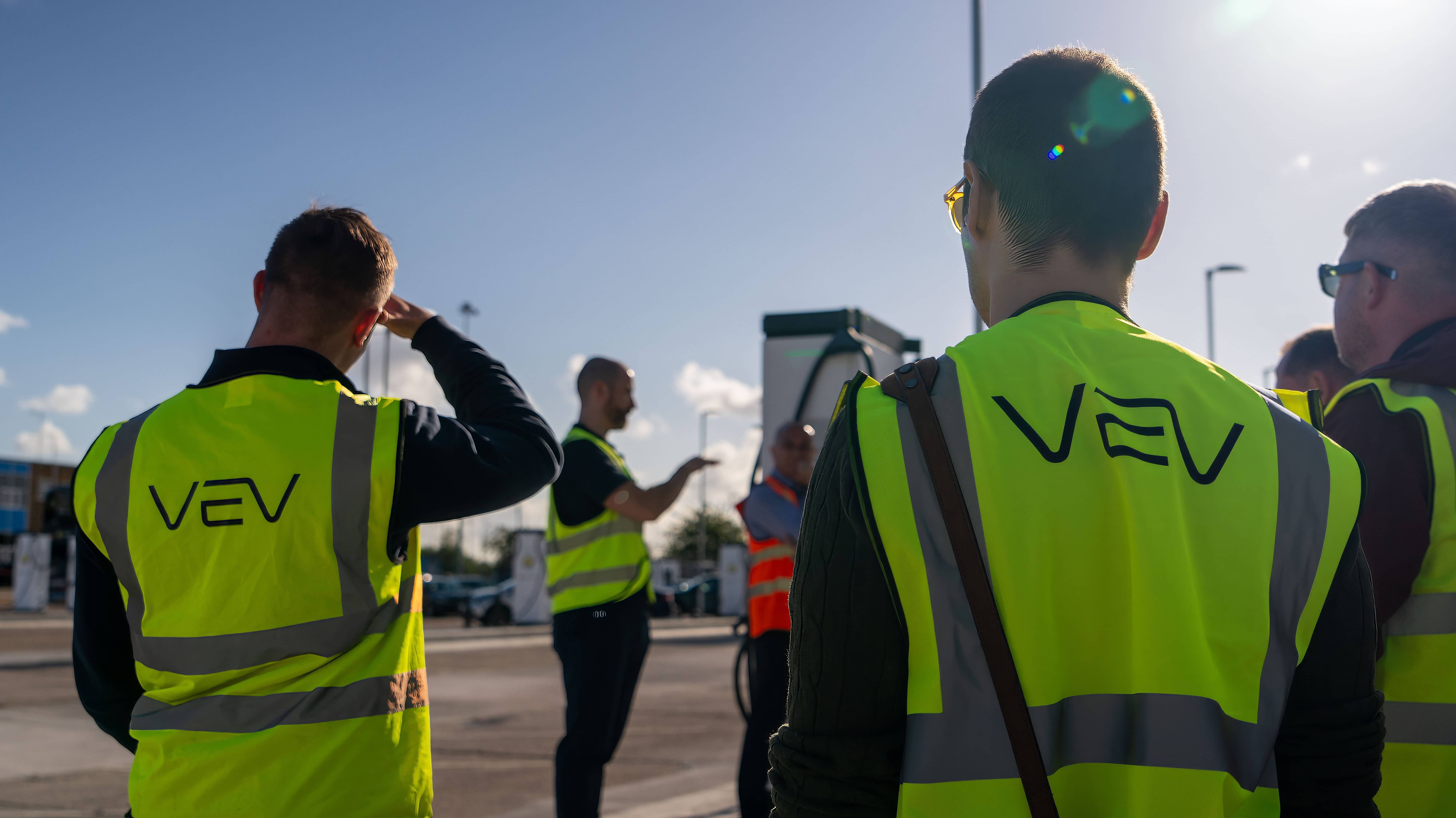
Last week, VEV attended the Optimal Charging: Fleet Electrification event in London. Our CEO Mike Nakrani spoke on the panel The New Economics of Fleet Electrification, alongside Michelle Gardner, Deputy Director Policy, Logistics UK, Chris Welch, Managing Director, Welch Group, and Olly Craughan, Head of Sustainability, DPD UK. It was an insightful panel, touching on many aspects of the industry and asking questions that need to be answered. More than anything, the conversation made clear that fleet electrification is no longer just about the vehicle itself. The real challenge – and opportunity – lies in the wider ecosystem around it: infrastructure, energy, policy certainty, financing and operational strategy. For years, the debate around fleet electrification has centred on one question: when will the vehicle cost come down enough to make the business case work?
That question still matters. But it is no longer the whole story.
Across the commercial vehicle sector, the conversation is becoming more mature, more practical, and more operational. The economics of electrification are no longer just about comparing the sticker price of an electric vehicle with its diesel equivalent. They are about infrastructure, energy, operating models, financing, planning horizons, and the ability to adapt fleets around real-world use cases. In short, the industry is moving beyond a simple vehicle comparison and toward a broader understanding of what it really takes to make electrification work at scale.
Infrastructure is still the biggest barrier
One theme comes up again and again: infrastructure remains the critical enabler.
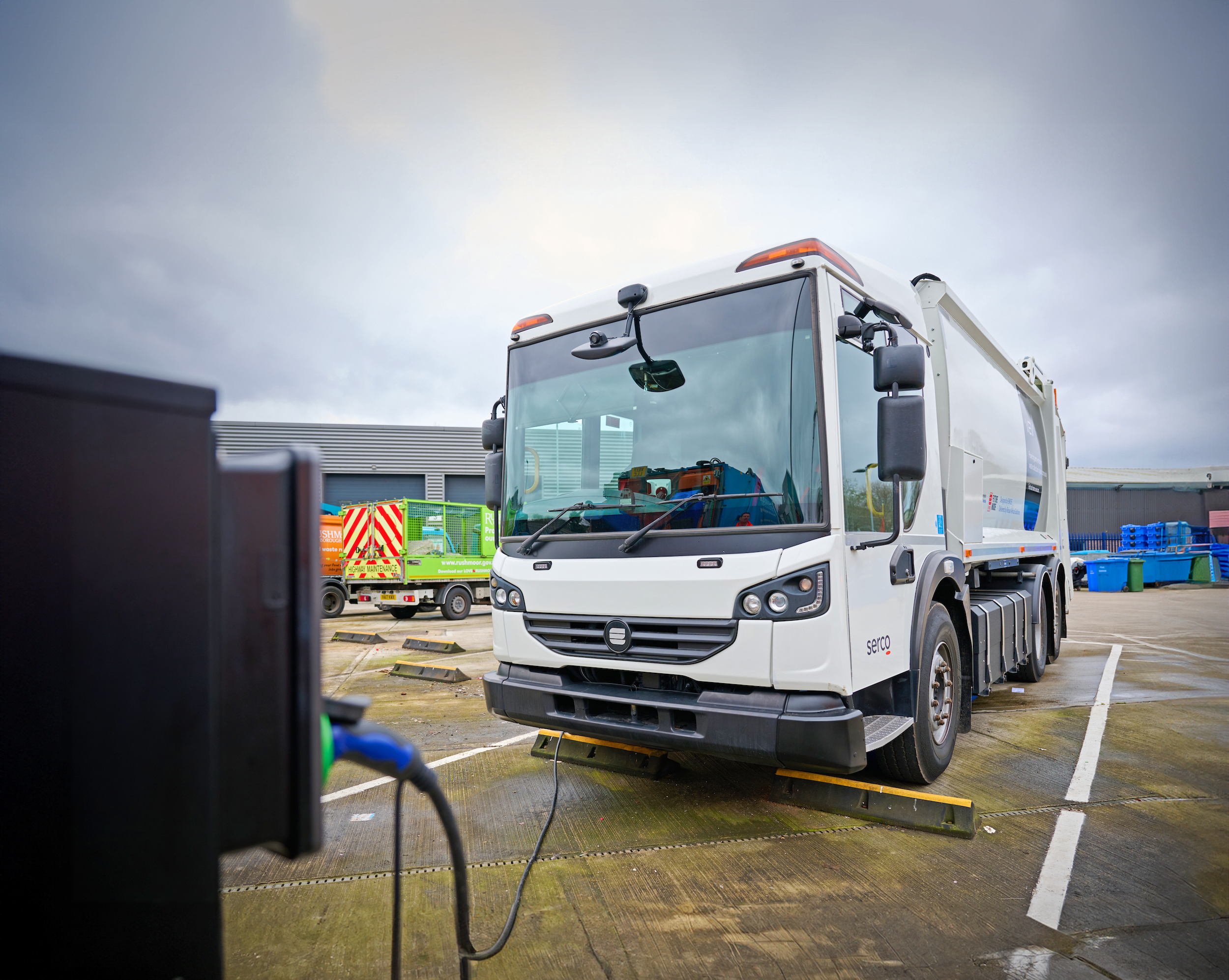
For most operators, especially those running larger commercial vehicles, depot charging is still the preferred route. That is entirely understandable. Fleet operators want control. They need confidence that vehicles will be charged when required, available when needed, and integrated into operational schedules they already manage tightly. But that preference creates a major challenge. If the transition depends on depot charging, then electrification becomes as much a grid and infrastructure problem as a vehicle one.
Operators are not just asking whether they can install chargers. They are asking:
- Can they secure enough power at the depot?
- How long will a grid upgrade take?
- What much will the connection cost?
- Will they be left paying for capacity they cannot yet use?
- Are they using too much and going over their limit?
- How do they phase investment as the fleet transitions over time?
These are not side issues. In many cases, they are the issues determining whether electrification moves forward at all.
TCO is very important, but you must look at the full picture
Total cost of ownership remains the lens through which many fleet decisions are made. But TCO models are often too simplistic. A spreadsheet comparison between diesel and electric can be useful as a starting point, but it does not reflect the full operational reality. The economics of electrification depends on how vehicles are used, the payload, how long they are kept, how they are financed, how charging is managed, and what electricity actually costs in practice. For some fleets, the biggest mistake is treating an electric vehicle as a direct replacement within an unchanged diesel-era operating model.
That rarely works.
Electrification requires a different approach to:
- asset life
- depreciation
- maintenance assumptions
- energy purchasing
- charging windows
- route planning
- vehicle utilisation
A vehicle held for three years under a traditional replacement cycle may look difficult to justify. The same asset held for much longer, financed differently, and operated more efficiently can look very different economically.
That is why the real questions are: does TCO work for EVs, under what conditions does it work, and how well are those conditions being managed?
Energy has become a strategic input, not just an overhead
One of the clearest shifts in thinking is around energy itself. Historically, fuel procurement was a visible fleet priority, while electricity was often treated as a background utility cost. That mindset is changing fast. For electric fleets, energy is fuel. It is now central to commercial performance. And unlike diesel, electricity is dynamic. The cost of charging depends on: Tariff structure, time of use, site configuration, standing charges, flexibility contracts, charging speed and whether the fleet is relying on public or private infrastructure. This creates both opportunity and complexity. On one hand, smart charging and flexible procurement can materially reduce costs. On the other, poorly structured energy contracts, oversized infrastructure, or unmanaged peak charging can quickly undermine the business case. That is why successful electrification is increasingly tied to better energy intelligence. Operators need to understand not just how much electricity they use, but when they use it, how they buy it, and how charging behaviour interacts with wider energy costs.
Data and operational insight are becoming competitive advantages
Another strong theme is that electrification rewards operational discipline.
The fleets making progress are not relying on assumptions. They are looking closely at:
- route patterns
- vehicle dwell time
- payload
- topography
- daily mileage
- charging availability
- depot return behaviour
That matters because not every vehicle in a fleet is equally difficult to electrify.
In many cases, a meaningful portion of the fleet can transition today if decisions are based on real operating data rather than edge-case assumptions. The challenge is that many organisations still evaluate electrification against their hardest routes first, instead of starting with the use cases most likely to succeed. Lat year, VEV conducted a real-world trial to put some of these assumptions to the test! If you would like to find out more on our findings, then download the report here. This is where digital tools, telematics, and charging optimisation platforms are becoming far more important. They help operators move beyond theory and into practical deployment, identifying where electrification already stacks up and where it does not yet. That kind of visibility matters, especially as fleets scale. What can be managed manually across a handful of vehicles becomes much harder across dozens or hundreds.
The transition will not be uniform – and that is okay
One of the more important realities emerging across the sector is that not every route, depot, or duty cycle will electrify at the same speed.
Some use cases are already well suited:
- back-to-base operations
- predictable urban routes
- lower daily mileage
- lighter payloads
- fleets with strong depot control
Others remain more challenging:
- long-distance transport
- high payload operations
- sites with constrained power access
- locations facing long lead times for upgrades
Acknowledging that is not a sign of resistance. It is a sign of realism.
The transition will happen unevenly, and the most effective strategies are likely to be phased rather than all-or-nothing. The goal should not be to force electrification into every use case immediately. It should be to accelerate the routes and operating models where it already makes sense, while building the policy, infrastructure, and commercial mechanisms needed for harder segments to follow.
Policy certainty still matters
While there is growing evidence that some fleet segments can electrify today without waiting for perfect conditions, policy still plays a major role.
What operators need is not just ambition. They need confidence.
That means:
- longer-term funding frameworks
- clearer roadmaps
- certainty around grants and incentives – including confidence that support will continue, with new funding still being released
- better alignment between infrastructure planning and fleet transition targets
- support for the hardest-to-electrify use cases, not just the easiest ones
Short-term schemes can help stimulate early movement, but they do not always support long-term investment planning. Fleet transitions happen over years, not weeks. Infrastructure investment, procurement cycles, financing decisions, and depot strategy all require stability.
Without that certainty, even willing operators may delay decisions.
Collaboration will matter more than ever
Another important thread is that no single organisation will solve this transition alone. Fleet electrification touches multiple sectors at once: From logistics, public transport, local authorities, energy providers, charging operators, software platforms, finance partners and policy makers. That creates a need for collaboration that is more practical than theoretical. Shared infrastructure, smarter procurement models, co-located charging hubs, joint learning, and cross-sector coordination are all likely to play a role in reducing risk and improving utilisation. The market does not just need better vehicles. It needs stronger partnerships around the systems that support them.
Final thought
The economics of fleet electrification are changing.
Vehicle cost still matters, but it is no longer the only lever. Increasingly, success depends on getting the wider system right: infrastructure, energy, operations, data, financing, and policy.
That makes the challenge more complex. But it also makes the opportunity clearer.
Because once electrification is understood not simply as a vehicle swap, but as an operational and energy transformation, the path forward becomes more actionable. Start with the right use cases. Build around real data. Treat energy as a strategic asset. Invest with a long-term view. And focus on scale where the economics already work.
That is where the next phase of fleet electrification will be won.
If you would like to find out more about VEV, then get in touch.
1 April 2026