



Quick Summary
- Depot electrification requires careful coordination across vehicles, power, charging infrastructure, software and people.
- Starting grid connection applications and legal processes early can improve certainty around project timelines and energisation.
- Operators should assess total cost of ownership, as lower running and maintenance costs can strengthen the case for electric vehicles.
- Vehicle trials help confirm that range, performance and charging compatibility meet the fleet’s operational needs.
- Early collaboration with depot teams can ensure infrastructure designs reflect real vehicle movements, parking and charging requirements.
- Well-timed driver and maintenance training helps ensure teams are ready when the vehicles and infrastructure go live.
Behind the build: what does it take to deliver an electric fleet depot?
Tom Berry, Project Manager at VEV, explains what happens behind the scenes of a depot electrification project, from securing a grid connection and managing suppliers to preparing drivers and testing vehicles.
Electrifying a fleet depot involves much more than installing chargers. Grid connections, legal agreements, vehicle selection, infrastructure compatibility and staff training must all come together before electric vehicles can enter service.
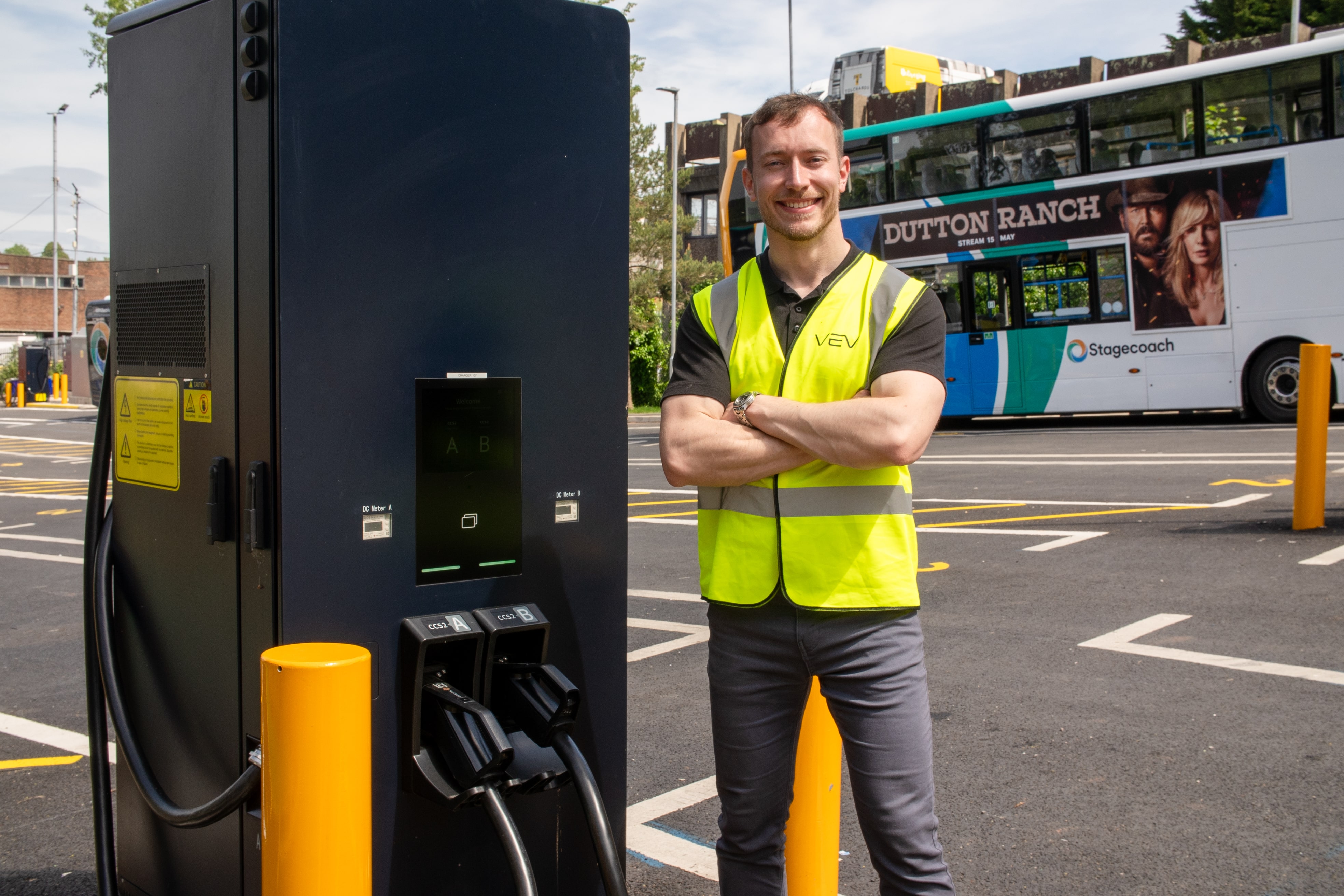
As Project Manager at VEV, Tom Berry oversees the physical delivery of charging infrastructure for VEV’s bus and public transport customers. In this Q&A, Tom discusses some of the challenges that customers may not see and shares his advice for operators planning their first electric depot.
What does your role at VEV involve?
I oversee the programme for our bus and public transport customers, with responsibility for the physical delivery of projects on site.
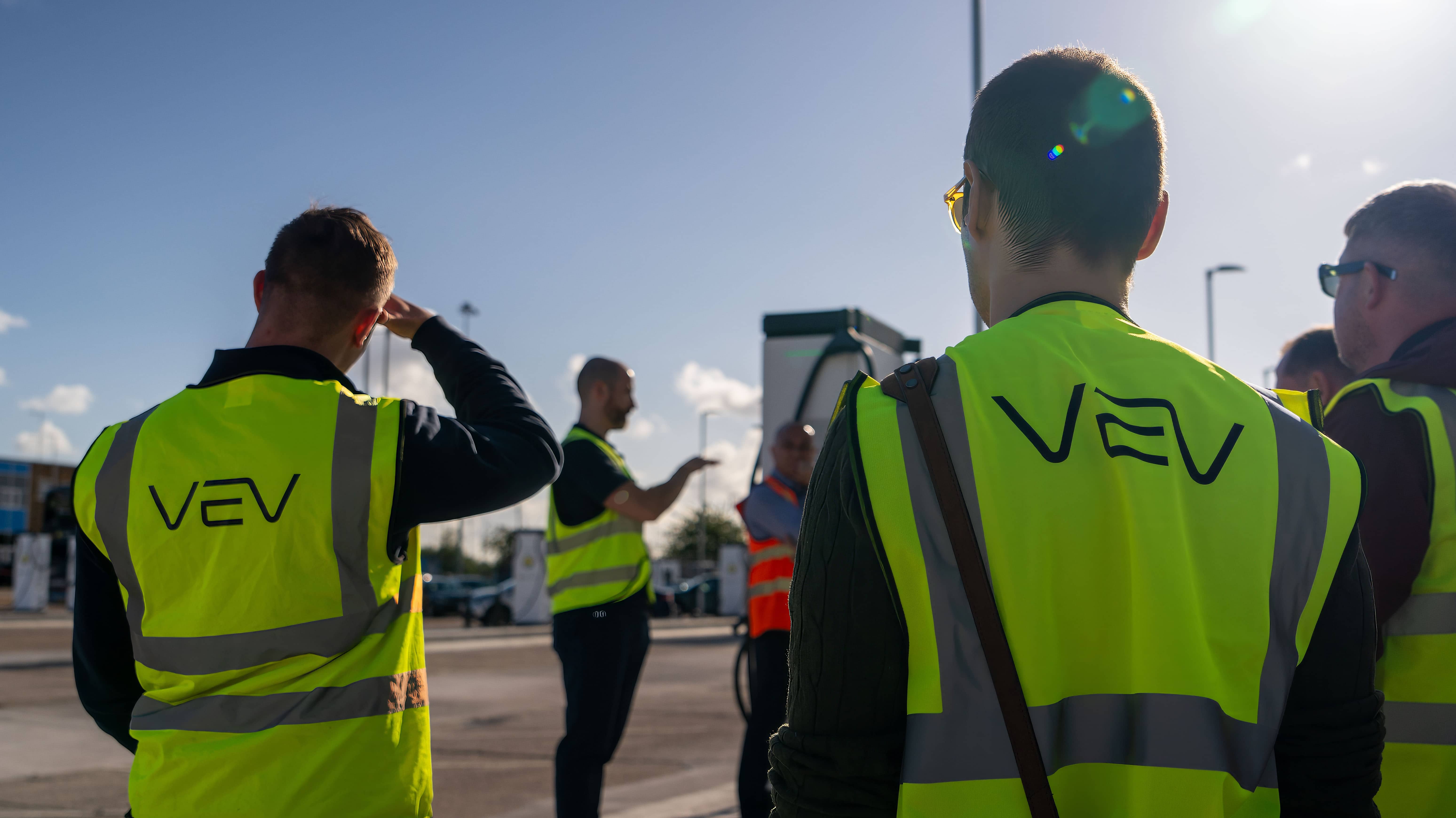
Once the commercial details have been agreed, the project is handed over to me. My role is to make sure the right teams and materials are in place, mobilise everyone on site and oversee the work through to completion. At the end of the project, we work through any remaining items with the customer, energise the infrastructure and make sure everything is up and running before handing it over to our operational teams for ongoing support.
Alongside delivery, I also maintain oversight of where each project is across commercial development, design and procurement. That means I can provide customers with a clear view of progress across their different projects and the work still to come.
What misconceptions do you commonly hear about electric fleets?
We tend to hear fewer misconceptions from existing customers because they already have experience of electric vehicles. The questions are more common among potential customers who are still exploring the technology.
The two main concerns are usually range and cost.
Electric buses can have a higher purchase price than diesel buses, so a smaller operator may understandably ask why it should invest in them. However, the purchase price does not provide the complete picture. Operators also need to look at the total cost of ownership.
Electric vehicles have fewer moving parts than diesel vehicles, which can reduce maintenance requirements. Operators may also benefit from lower running costs by replacing diesel with electricity. When these factors are considered across the life of the vehicle, the commercial case for electric can become much stronger. There are also the environmental benefits of operating a cleaner and quieter fleet.
Range is another common concern. Electric vehicles cannot yet meet every duty cycle that a diesel vehicle can, which is why many early adopters begin by placing electric vehicles on shorter or more predictable routes.
That does not mean operators need to wait until every route can be electrified. Starting with suitable routes allows them to gain experience now. Battery technology and vehicle capability will continue to develop, so operators can build on those early deployments as the technology improves.
What are the biggest dependencies in a depot electrification project?
The grid connection is one of the biggest dependencies. Obtaining the physical connection is only part of the process; the associated legal agreements can also take a considerable amount of time.
This creates additional operational considerations. Temporary power may be needed, but that can add cost and complexity and may not be suitable for every site. It is therefore important to treat the grid connection and its legal requirements as critical parts of the programme from the beginning.
Equipment availability, civil works, vehicle delivery and customer grant funding requirements can also affect the schedule. These elements are interconnected, so a delay or requirement in one area can have consequences across the wider project.
What unexpected challenges can emerge once work starts on site?
One challenge is that a design can feel different when people see it physically taking shape.
A customer may review a drawing and be happy with the proposed layout. Once construction begins and they can see the equipment in place, they may identify something they would like to change.
That is understandable. People absorb information in different ways, and some find it easier to assess a design in person than on a drawing – we will always work with the customer to find the right solution. Changes that take place during project process can lead to extensions of the delivery programme and may result in variations to the original scope.
This is why it is useful to involve the people who understand the depot’s daily operation as early as possible. Their knowledge of how vehicles enter, park, charge and leave the site can help identify practical considerations before construction begins.
What can fleet operators do early to make delivery easier?
Starting the grid connection process as early as possible can make a significant difference.
Before applying, operators need to understand how much power their future fleet will require. Many will not have the capability to complete that analysis internally, so they may need support to assess their routes, vehicles, charging windows and projected fleet growth. This is where VEV can start to help.
Once the likely power requirement is understood, the grid application and legal process can begin. Ideally, this should be moving forward well before construction starts.
Operators should also consider their longer-term plans. The infrastructure required for an initial group of vehicles may be very different from what is needed for a fully electric fleet. Understanding that future requirement can help the project team design a site that supports the first phase without creating unnecessary barriers to expansion and introducing regret costs.
How should operators prepare their depot teams, drivers and maintenance staff?
Timing is very important.
Drivers need to be trained before the vehicles enter service, but operators do not want to complete that training too early. If the infrastructure programme is delayed, particularly because of a grid or legal dependency, there may be a long gap between the training and the drivers using the vehicles.
The project team and the operator therefore need to communicate closely so that training is aligned with the expected go-live date.
Operators also need to decide how their electric vehicles will be maintained. A smaller operator may choose to outsource maintenance, while a larger business may invest in developing the necessary skills internally.
Teams working on electric vehicles require the appropriate training and accreditation to do so safely. Operators may also need to review their workshop equipment and working practices, as maintaining an electric vehicle can require different tools, processes and safety procedures.
Vehicle manufacturers will often provide training and may offer on-site support during a significant fleet rollout. Operators should use that opportunity to work alongside the manufacturer and build their own experience. Completing the relevant training shortly before the vehicles arrive can help teams get more value from this support.
There may also be depot improvements outside the main charging installation that the operator needs to manage. Considering these requirements early helps ensure that the depot, its people and its processes are ready at the same time as the vehicles and chargers.
What is the hardest part of electrifying a depot that customers rarely see?
A great deal of work goes into the day-to-day management of in-house teams, suppliers and dependencies.
There may be several contractors, manufacturers and specialist teams involved in a single project. If one organisation is late providing information, approving a design or delivering equipment, it can have a knock-on effect across the programme.
Project management involves keeping track of all those individual elements while also responding to what is happening on site. You may be concentrating on resolving one issue while another dependency is progressing in the background.
Much of that coordination is not immediately visible to the customer, but it is essential to keeping the project moving and making sure the different parts come together in the right order.
What advice would you give an operator planning its first electric depot?
Spend time planning before making the jump.
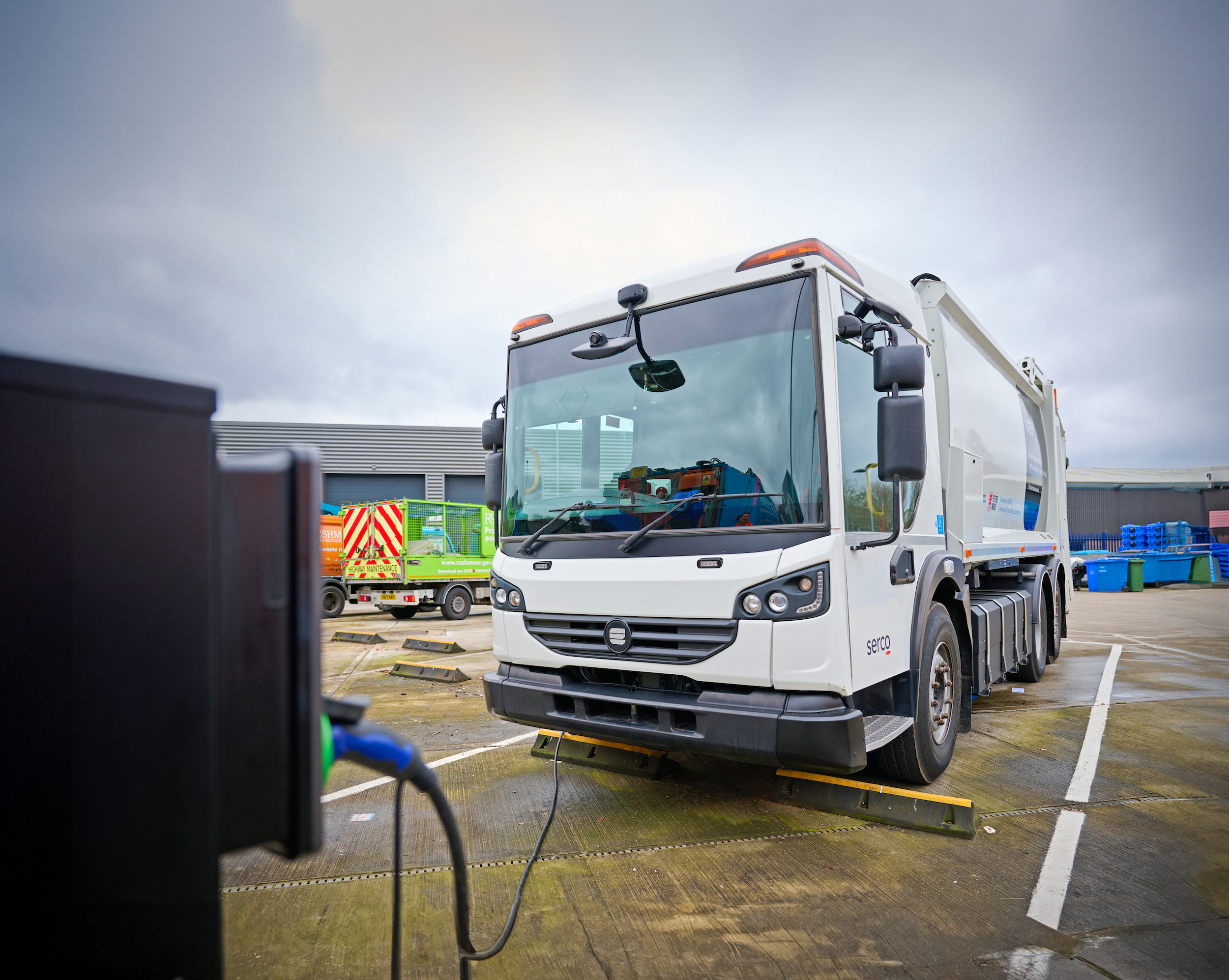
Start by understanding which vehicles you are likely to purchase and checking that they are proven against your operational needs. If the manufacturer has availability, take a demonstrator vehicle and test it in your real operation.
Before purchasing vehicles in my previous role in public transport, we would often use a demonstrator for one or two months. This gave drivers, engineers and customers the opportunity to provide feedback before a final decision was made. A managed trial can provide the same type of evidence for an operator considering electric vehicles.
Operators also need to ensure the selected vehicles are compatible with the proposed charging infrastructure and software. Vehicle-to-charger communication can differ between manufacturers and products, so compatibility needs to be checked before equipment is ordered. Identifying this during planning is much easier than resolving it after installation.
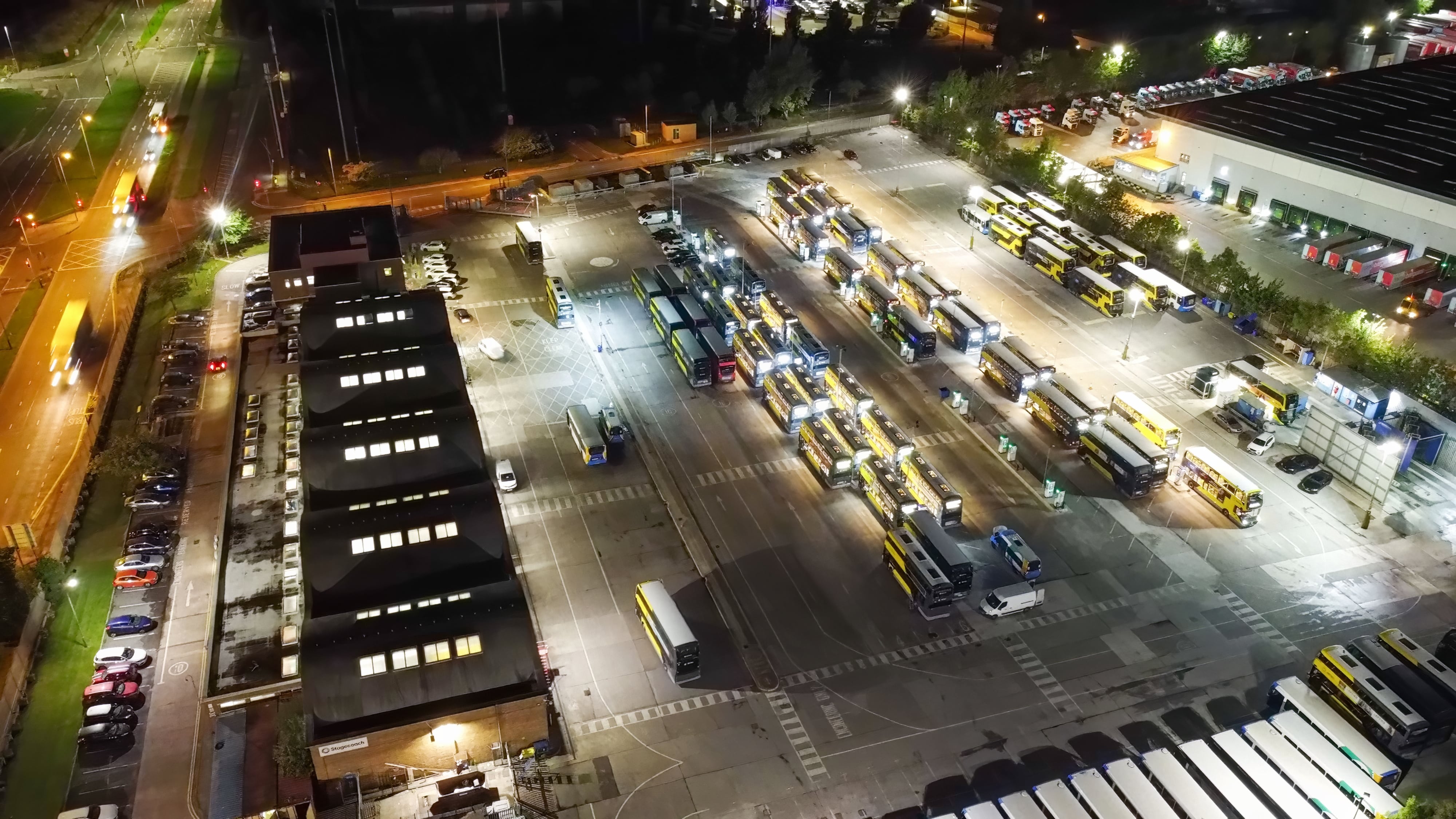
Depot layouts also need to reflect how the vehicles actually operate. The project team should understand how vehicles move around the site, where they park, how long they remain there and when they need to return to service. Vehicle-tracking exercises and input from depot teams can help create a design that works in practice.
My main advice would be to test the vehicle, confirm the compatibility of the technology, understand the future power requirement and begin the grid connection process as early as possible.
Good planning brings the whole project together
Depot electrification brings together vehicles, power, infrastructure, software and people. Each element needs to be considered as part of one operational system.
Operators do not need to electrify every route or vehicle at once. Beginning with suitable routes, testing the technology and planning the supporting infrastructure gives businesses an opportunity to build experience and confidence.
The earlier operators understand their requirements and dependencies, the better prepared they will be to deliver infrastructure that works from its first day of operation and can support the fleet as it grows.
A successful depot electrification project starts well before construction begins. By understanding operational requirements, testing vehicle suitability, progressing the grid connection early and preparing depot teams for the transition, operators can reduce uncertainty and build infrastructure that works from day one.
Every fleet and depot is different, so the right approach must be shaped around real routes, charging windows, site constraints and future plans.
If you are planning your first electric depot or preparing to expand an existing electric fleet, speak to VEV about turning your operational requirements into a practical, future-ready electrification plan.
Oct 28 2026