



The cold chain is both a complex logistics system and one of the country’s most complex distributed energy systems.
As fleets electrify, operators must move beyond vehicles and take control of site-wide energy — spanning cold-stores, transport refrigeration and charging infrastructure. Those who start and learn will unlock cost, resilience and competitive advantage.
A system that never stops – and is bigger than most realise
From fresh food on supermarket shelves to temperature-sensitive pharmaceuticals, refrigerated logistics underpins billions of pounds of UK economic activity.
But it comes at a cost.
The UK cold chain’s energy demand is comparable to powering a major city – operating 24/7, year-round.
Scale of the system:
- Warehouses operating down to -20°C
- 40,000–55,000 diesel transport refrigeration units (TRUs) in operation¹
- ~235 million litres of diesel consumed annually¹
- Refrigerated trailer units consuming 1.5-4.2 litres of diesel per hour²
Environmental impact:
- ~590 kilotonnes of CO₂ emissions per year¹
- 4.4 kilotonnes of NOx and 126 tonnes of PM2.5 emissions¹
- Refrigerated vehicles producing ~11% more CO₂ than non-refrigerated equivalents⁴
Auxiliary diesel refrigeration units often continue running even when vehicles are stationary, generating both emissions and noise in depots and urban areas.

Interested in seeing more of this content?
VEV post weekly updates, blogs and thought-leadership in the EV space. Subscribe to our LinkedIn monthly digest to never miss a moment.
Subscribe todayThe transition is bigger than the truck
In transitioning to electric transport, operators must move away from diesel for both the truck and the refrigeration unit (TRU). This is not a vehicle upgrade, it is a site-wide energy transformation. Truck charging, trailer refrigeration and warehouse cooling and solar generation must now operate as part of a single, integrated energy system.
Why electrifying cold chain is harder than it looks
Cold chain energy demand is not a stable load.
It is shaped by:
- Ambient temperature variation (day/night and seasonal)
- Seasonal demand peaks, particularly in chilled food and pharmaceuticals
- Legacy on-off compressor systems, creating inefficient demand spikes compared to modern VRF systems
- Operational inefficiencies such as door openings, insulation losses and throughput
At the same time:
- Solar is a no-regrets investment, directly offsetting daytime cooling demand
- But most solar and grid systems are sized to current warehouse demand, not future fleet electrification
The result: limited capacity headroom just as demand is about to increase significantly.
Cold chain is already ahead on energy
Cold chain operators are in a strong position due to their historically high energy intensity, many already have:
- Sophisticated energy procurement strategies
- Experience managing exposure to volatile electricity markets
- Established site-wide energy generation and consumption tools
- Unlike many industrial sectors reliant on fossil fuels for heating, cold chain operations are already predominantly electrified – and increasingly powered by renewable energy.
This creates a powerful foundation. The challenge is not starting – it is integrating and optimising a more complex system.
The opportunity: turning complexity into competitive advantage
Operators that act early will unlock:
- Lower and more predictable operating costs
- Reduced exposure to fuel and energy price volatility
- Compliance with tightening regulation
- Stronger customer sustainability propositions
They gain visibility and control over one of the UK’s most complex energy systems.
From cold store to energy hub
To succeed, operators must rethink the depot.
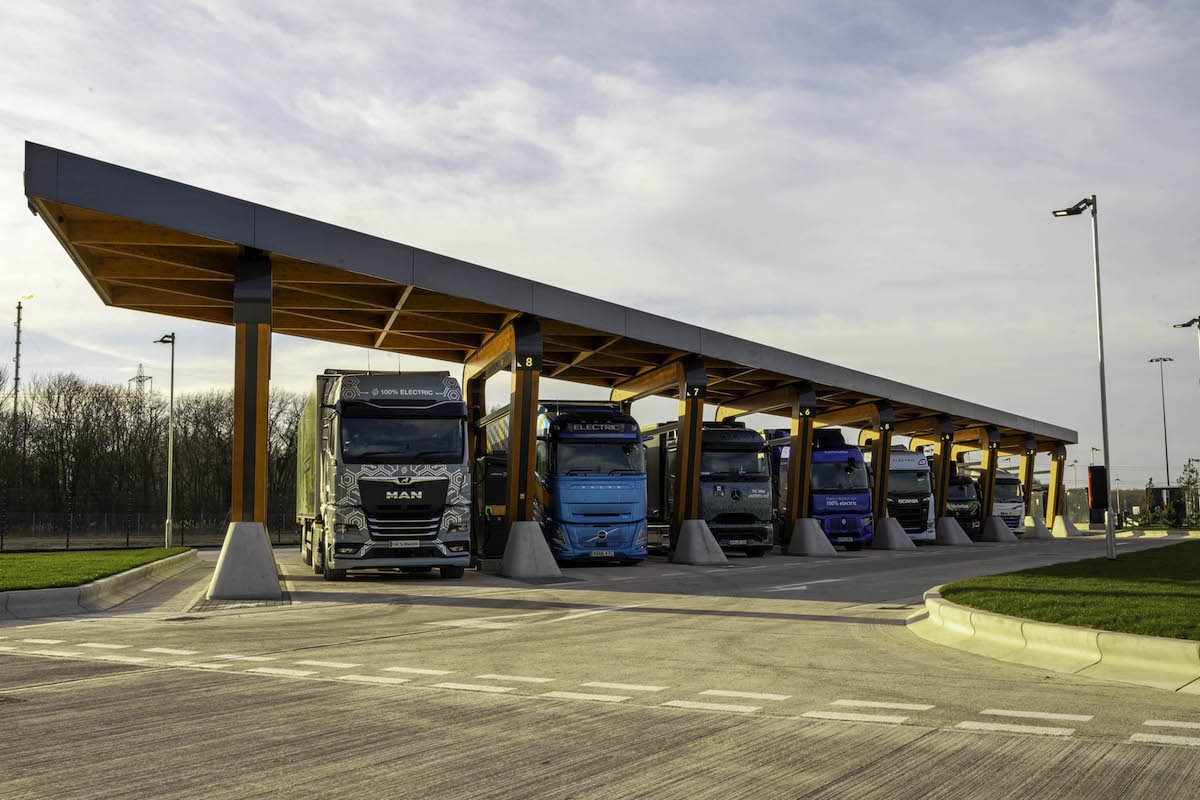
Cold chain sites must evolve into integrated energy hubs, capable of managing:
- Warehouse refrigeration
- Electric truck charging
- Trailer (TRU) electrification
- On-site generation and storage
This introduces new design and operational challenges:
- Yard layout for concurrent parking and charging of trucks and trailers
- Managing and mitigating peak demand spikes
- Ensuring operational resilience across the cold chain
- Optimising whole-site energy cost (solar, storage, charging, grid)
Truck charging and trailer refrigeration are separate, high-demand systems, competing for the same power infrastructure.
This makes integrated design, modelling and real-time control essential – enabled through platforms such as VEV IQ.
Optimising your grid capacity
Cold chain already demands high power. Add electrified transport and demand will only increase.
Operators have multiple levers:
- Reduce existing demand
Improve efficiency through insulation, compressor upgrades and LED lighting - Maximise on-site generation
Expand solar across roof space and consider further ground or carport installations - Deploy battery storage (BESS)
Utilise excess solar and grid capacity to offset peak demand periods - Model real-world operations
Understand vehicle, TRU and cargo energy demand across routes and seasons - Work with your DNO
Explore flexible connections and time-of-use capacity increases - Integrate energy and charging systems
Coordinate all site energy “givers and takers” through a unified platform
In many cases, significant capacity can be unlocked before costly grid upgrades are required.
Final thought
Cold chain logistics has always been complex. But as the industry electrifies, that complexity becomes an energy supply and optimisation challenge as much as a transport one. Those who build on their existing energy expertise – and invest in visibility, control and integration today – will not just decarbonise faster. They will operate more reliably, more efficiently, and more competitively.
25 March, 2026
References
Zemo Partnership (2024), HGV Auxiliary Engines: Baseline auxTRU testing and modelling of UK impacts
X2 (UK), Fridge Trailers – Staying cool on the road
Hultsteins, Diesel-Free Refrigeration Overview
LowCVP / TRU emissions research (as referenced within Zemo and industry reports)
UK Government, Climate Change Agreements (CCA) Scheme Guidance