

Quick Summary
- UKREiiF 2026 showed that the UK’s growth conversation is increasingly becoming an energy conversation.
- Power availability is now a site-selection issue, not just a technical detail to solve later.
- Logistics, manufacturing and industrial occupiers will need sites that can support higher energy demand from electrification, automation, AI and decarbonisation.
- Local and combined authorities have a key role in making places investment-ready by joining up land, grid capacity, transport, planning and delivery.
- The question is shifting from “is there land?” to “is this place ready?”
- For VEV, practical net zero means making infrastructure, energy, transport, finance and operations work together from the outset.
UKREiiF has always been a meeting point for public sector ambition and private sector capital. But the 2026 event in Leeds pointed to something sharper.
The UK’s growth conversation is becoming an energy conversation.
Across regeneration, logistics, manufacturing, data centres, industrial land, housing and transport, one question kept appearing in different ways:
Can this place actually be powered?
For developers, investors and occupiers, that question is no longer a technical detail to solve later. It is becoming part of site selection, shaping risk and creating a new source of competitive advantage.
For local and combined authorities, this changes the investment proposition. Places that can show a clear link between land, grid capacity, clean energy, transport and planning support will be better placed to attract private capital.
That matters because many of the sectors driving growth are becoming more energy intensive. Occupiers are all being reshaped by automation, electrification, AI and transport decarbonisation. The sites they occupy will need to support far more complex energy demands than many were originally designed for.
From development land to energy-ready places
One of the clearest themes around UKREiiF was the way public bodies are starting to present power and energy infrastructure as part of their place-based investment offer.
Northumberland County Council’s launch of the Northumberland Strategic Investment Site is a useful example. The 77-hectare site is being positioned for advanced manufacturing, clean energy, offshore renewables, electrification and energy-intensive users. Its proposition references existing and planned grid infrastructure, clean energy sources, nearby port infrastructure and high-capacity digital connectivity.
That is a sign of where the market is moving.
Traditional inward-investment criteria including land availability, transport links, labour, planning support and incentives all remain important. But they are no longer enough on their own.
For many occupiers, the next questions are more practical:
- How much power is available?
- When can it be connected?
- How resilient is it?
- What will it cost to operate?
This is not just a data-centre issue, although that sector makes the challenge most visible. The same logic is spreading into industrial and logistics real estate. Electric transport, process automation, refrigeration, battery storage and on-site generation are all increasing the energy intensity of sites.
A well-located site may still become a poor operational choice if it cannot support future demand. By contrast, a site with a credible plan for securing and managing power may become more attractive, more resilient and more valuable.
Occupiers are already changing their criteria
The logistics real estate market is already showing this shift.
Tritax Big Box and Savills’ Future Space research found that power availability has become a much more prominent constraint for occupiers. In the Tritax 2025 report, 36% of occupiers cited power availability as a barrier to securing future space. That compares with 11% in 2023 and 7% in 2022. The report links this shift to electric vehicles, automation, AI and greener transport.
The Savills’ 2026 update reinforces the same direction of travel. It notes that power availability has become critical as businesses adopt AI, electric vehicle fleets and automation.
This matters because location decisions are long-term decisions.
A logistics operator choosing a site today is thinking about the next decade of customer expectations, carbon reporting and operational resilience. A manufacturer is thinking about future electrification and the ability to grow without being held back by power constraints.
For developers and landlords, this changes the definition of a strong site. It is no longer just about motorway access, labour catchment and planning potential -it is also about whether the site has a realistic route to meeting future power demand.
Grid connection is now a growth issue
UKREiiF also reflected a wider national challenge. The UK’s grid and connection system is under pressure.
The government has acknowledged that strategically important projects, including AI data centres, industrial sites, EV charging hubs and electrified industrial sites, should be prioritised within the grid connection system. It has also recognised that long waits are delaying viable projects.This is relevant far beyond the energy sector.
If a logistics park, manufacturing site, depot, port development or regeneration zone cannot secure the power it needs. The investment may be lined up. The land may be available. The occupier may be ready. But without power, progress slows.
That is why conversations around local energy, grid capacity and development viability matter. They are no longer side issues. They are becoming central to whether places can attract investment and deliver growth.
Net zero is becoming operational
Another major theme from UKREiiF was the shift from net-zero ambition to delivery confidence.
That message has a strong parallel across logistics, manufacturing and industrial development. Net zero is no longer credible if it only exists as a target. It needs to become an operational plan.
For developers and landlords, it means designing sites around how occupiers will operate in the future. Minimum specification is no longer enough if future occupiers need cleaner transport, higher power capacity, more resilient infrastructure and clearer carbon reporting.
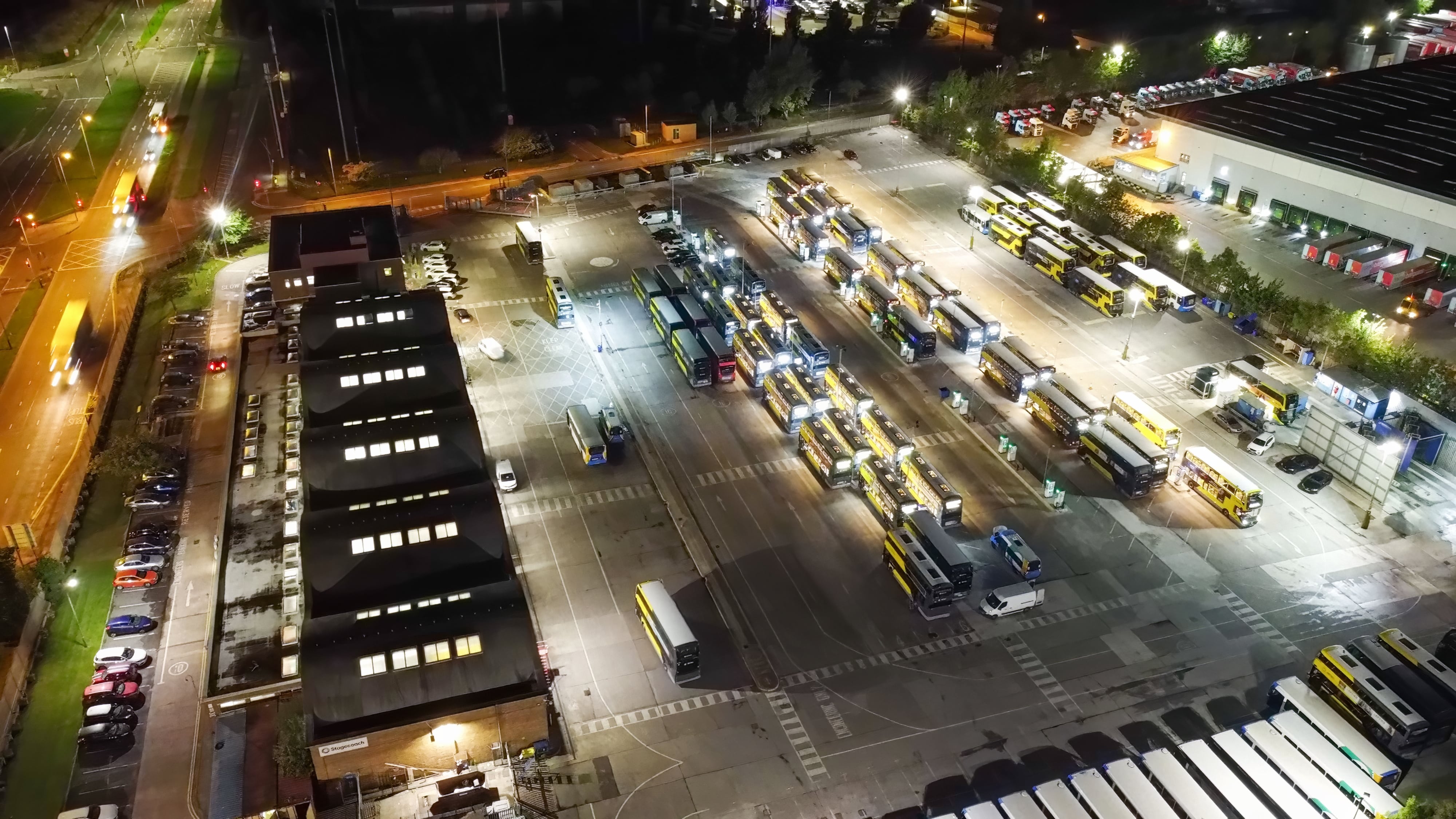
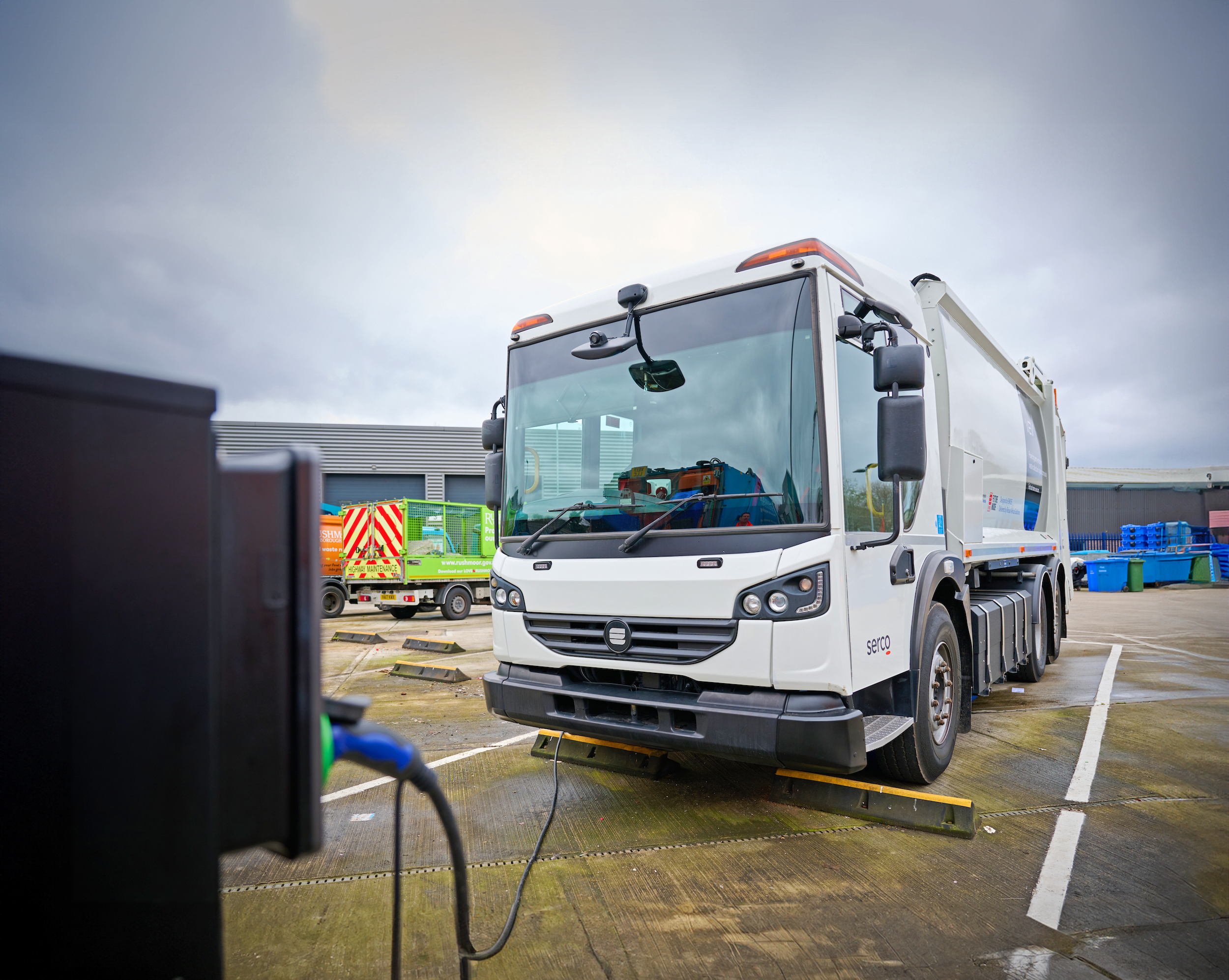
For logistics operators, that might mean understanding which depots can support electric vans or HGVs, when vehicles can charge, how that affects routes and what the whole-life cost looks like beyond the purchase price.
For manufacturers, it might mean understanding how process energy, site resilience, on-site generation and future electrification interact.
Local and combined authorities have a critical role
UKREiiF showed the continued importance of local and combined authorities as convenors of investment.
The strongest investment propositions are not just pieces of land. Local and combined authorities can play a decisive role. They can turn fragmented development opportunities into investable propositions by clarifying governance, planning, infrastructure sequencing and strategic intent.
The West Midlands’ launch of a £3.8bn Futures Fund at UKREiiF is a good example of this shift. The fund is intended to accelerate regeneration, affordable housing and economic growth, while using public-sector backing to unlock wider private investment.
For logistics and manufacturing, this matters because many of the barriers to net-zero delivery sit outside the control of any single occupier. Grid capacity, local planning, highway access, land assembly, depot relocation, charging infrastructure, renewable generation and skills all require coordination.
The private sector can invest, but it needs confidence. Local and combined authorities can help create that confidence by making energy readiness and infrastructure sequencing part of the investment conversation from the outset.
The practical challenge: joining the decisions together
The risk is that too many decisions are still made separately.
A developer may design a site before future energy and vehicle charging space needs are understood. An occupier may choose a location before charging requirements are assessed. A local authority may promote investment land without quantifying power availability. A finance team may challenge capex before the whole-life cost model is clear.
Each decision may make sense on its own. The problem is that practical net zero does not work in isolation. It depends on infrastructure, power, transport, finance and operations working together.
This is where the market is moving. The organisations that succeed will be those that join the decisions together earlier. That means understanding the site, the energy requirement, the transport need, the commercial case and the delivery plan as one connected picture. For occupiers, this reduces future operational risk. For developers, it strengthens the investment case. For local authorities, it makes clean growth easier to deliver.
From “is there land?” to “is this place ready?”
A useful way to summarise UKREiiF 2026 is that investment conversations are becoming more practical.
The old question was: is there land?
The better question is now: is this place ready?
- Ready for power demand.
- Ready for clean transport.
- Ready for automation.
- Ready for infrastructure delivery.
- Ready for commercially viable net zero.
- For developers, that creates an opportunity to differentiate sites through energy readiness.
- For occupiers, it creates a need to assess infrastructure risk earlier in location decisions.
For local and combined authorities, it creates a chance to attract investment by making clean growth easier to deliver.
For logistics and manufacturing, it creates a route to turn net zero from a compliance challenge into an operational advantage.
VEV’s view
UKREiiF reinforced that the next phase of net zero will not be delivered by ambition alone. It will depend on whether organisations can turn investment intent into practical, operational delivery.
The organisations that wait until energy becomes a constraint will find themselves reacting to delays, costs and compromises. The organisations that plan for it upfront will be better placed to secure investment, protect operational performance and make credible progress towards net zero.
At VEV, we believe this is where practical net zero now sits: not in isolated sustainability commitments, but in the detailed work of making infrastructure, energy, transport, finance and operations perform together.
27 May, 2026