



Charging infrastructure remains one of the biggest barriers to widespread electrification. For many logistics operators, developing private high-power charging facilities demands heavy capital investment, long grid lead times and operational capabilities that fall outside their usual business. At the same time, their customers are under growing pressure to decarbonise their supply chains, pushing them to move faster than ever before.
A new model is emerging to solve this challenge, one that uses infrastructure already in place across the UK’s bus network. Bus depots, with their high-capacity DC chargers, strong grid connections and professionally managed operations, represent a large, often under-utilised asset base. Opening this infrastructure to logistics operators presents a practical, scalable route to electrification without the prohibitive cost or timescales associated with building standalone charging hubs.
Unlocking Logistics Electrification Through Bus Depots
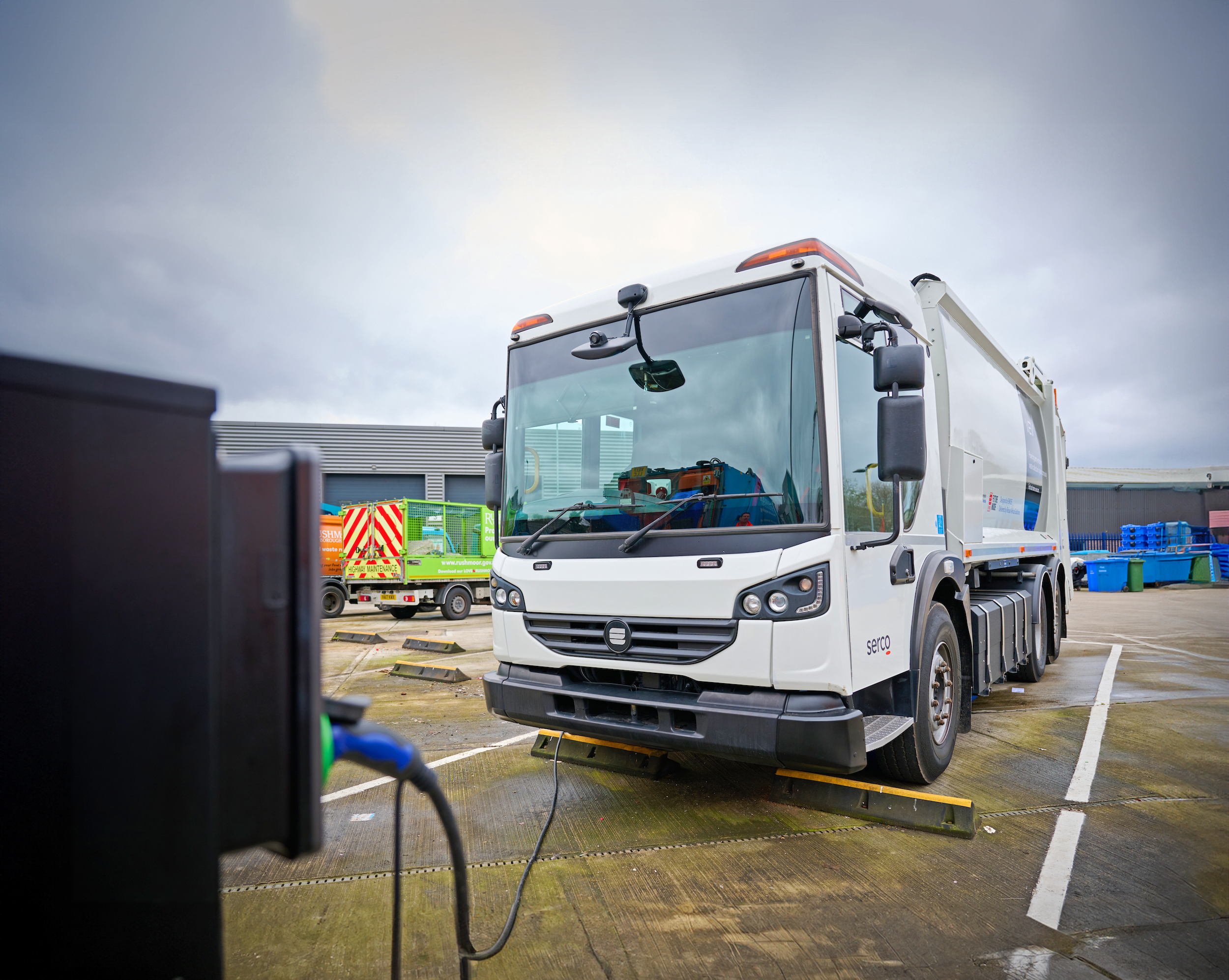
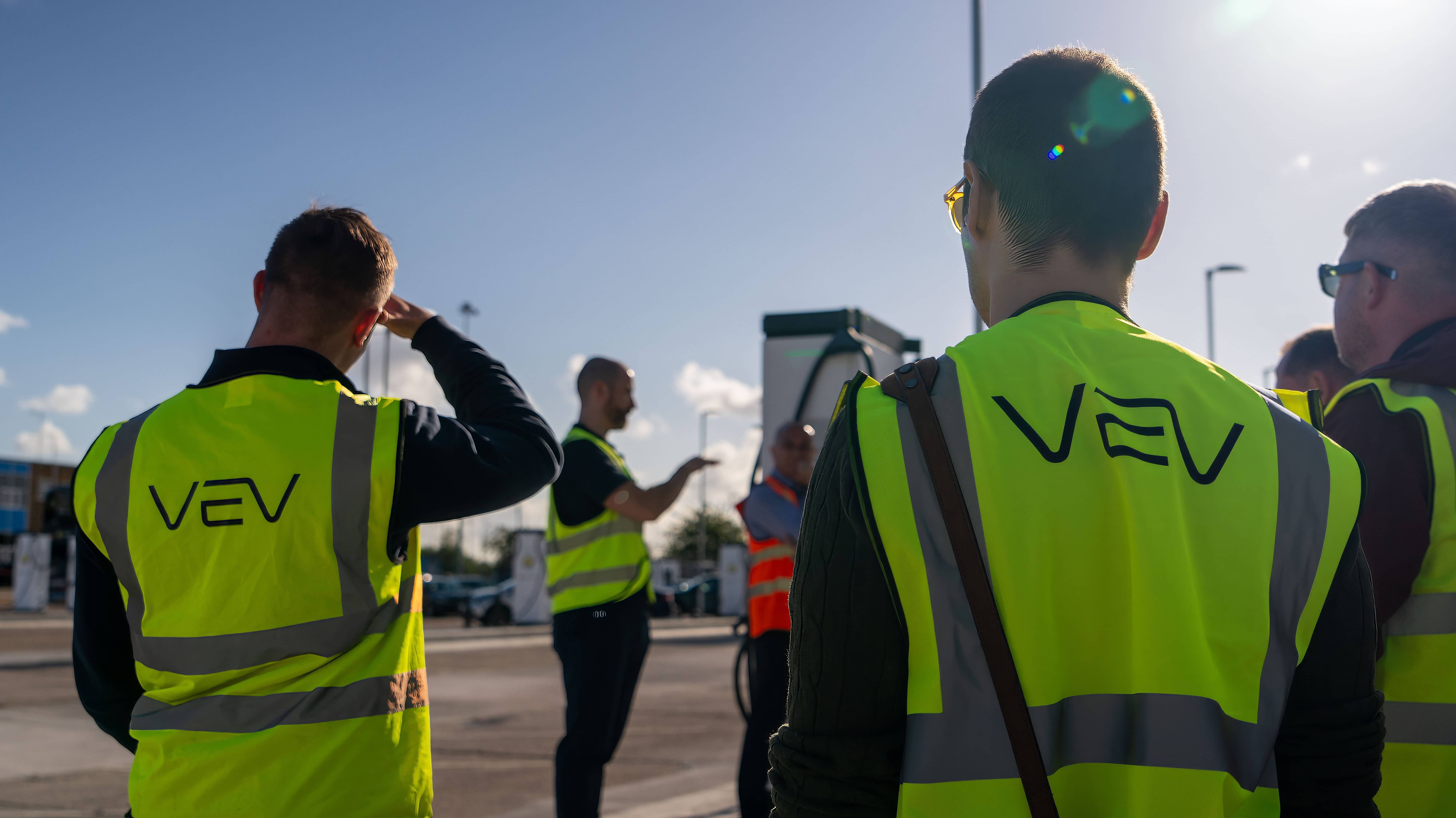
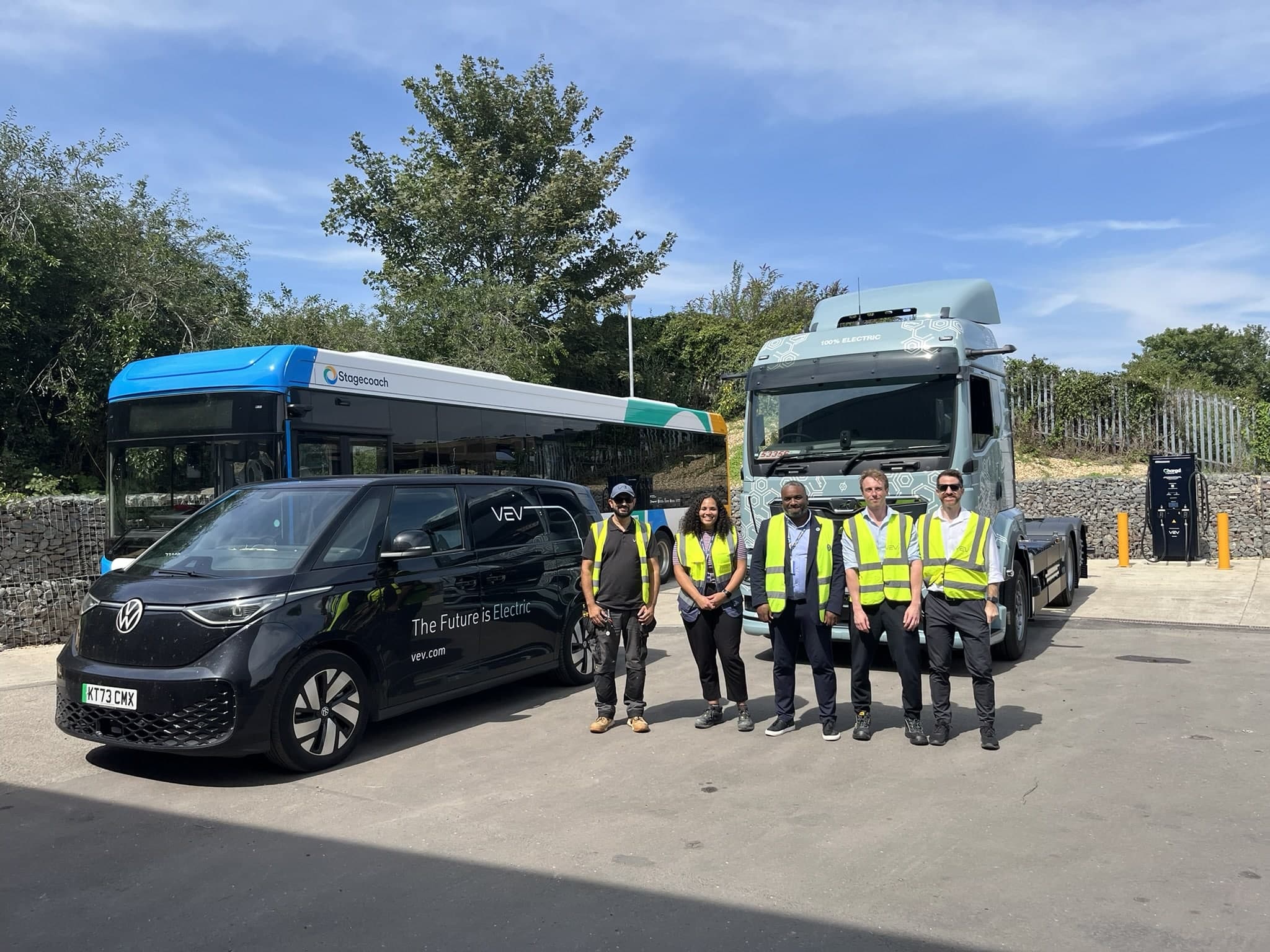
Stagecoach Midlands and VEV achieved a milestone that demonstrated exactly how shared charging can work in practice. At the operator’s Nuneaton depot, home to 45 high-power chargers and supported by on-site solar generation, a heavy-duty electric truck successfully completed its first charge on an infrastructure originally designed exclusively for buses. The depot’s design, layout and operational standards make it ideally suited for large commercial vehicles, illustrating how such facilities can seamlessly support a variety of third-party vehicles. By making this infrastructure available outside core passenger-service hours, Stagecoach can unlock a new revenue opportunity while providing logistics operators with access to reliable, high-capability charging that would otherwise require substantial investment.
Stagecoach, with the help of VEV, have since launched its first eHGV charging hub at their Stockton-on-Tees depot, designed to support hauliers in the Northeast of England. Using the VEV-IQ platform the team have full visibility of the sessions, from charging performance to asset utilisation. The Stockton project marks the beginning of Stagecoach’s national roll-out of shared charging hubs and shows the model is not just viable but scalable, offering a blueprint for hubs across multiple depots and regions strengthening the commercial case.
These early projects reveal how shared charging hubs can play a crucial role within a broader electrification strategy. While dedicated depot charging will remain essential for many operators in the long term, shared hubs provide the flexibility and access needed to accelerate progress today. They enable operators to pilot eHGVs, build operational familiarity and test routes while their own depot investments are being planned or delivered. For bus operators, opening up existing infrastructure increases utilisation and strengthens the commercial case for electrification by generating new revenue streams and shortening payback periods.
Energy optimisation is another major benefit of incorporating shared hubs into a wider electrification plan. When fleets access infrastructure at different times of day, operators of the hub can manage demand more intelligently, smoothing peaks and improving the overall efficiency and resilience of their energy system. At sites where solar generation already supports charging operations, this creates additional flexibility that infrastructure owners can use to maximise utilisation during off-peak periods. Logistics operators benefit through reliable access to well-managed opportunity charging locations that support longer routes, reduce downtime and give them more confidence in deploying eHGVs before their own depots are fully electrified.
A Scalable Pathway to National Fleet Decarbonisation
The electrification of logistics is not a challenge that can be addressed by individual operators working in isolation. Depot electrification will continue to be a fundamental part of long-term fleet planning, but developing a truly national charging network requires multiple complementary solutions working together. Shared charging hubs located at bus depots and other high-capacity sites help fill the gaps while logistics firms build out their own infrastructure. By making use of assets that already exist and are professionally operated, these hubs provide immediate support for eHGV operations, strengthen regional coverage and accelerate the broader rollout of dedicated logistics charging across the country
VEV plays a critical enabling role in this ecosystem. By designing, building and operating high-power charging solutions, integrating smart energy systems and digital management, VEV ensures that shared hubs deliver the performance, reliability and visibility required for heavy-duty commercial use. From modelling commercial viability to integrating renewables and coordinating on-site operations, VEV provides the technical and operational backbone that allows shared charging to scale with confidence.
The early success at Nuneaton and Stockton marks a turning point. It demonstrates that shared bus depot infrastructure can support logistics electrification today. For logistics operators, it means the charging they need is already available in key locations across the UK. For bus operators, it transforms under-utilised assets into a new revenue channel while accelerating national decarbonisation.
The momentum behind electrification will continue to build, and the operators who embrace shared charging now will benefit operationally, commercially and reputationally. With the right partners and the right infrastructure, shared charging hubs offer a proven, scalable route to a cleaner, more efficient logistics sector as they take the steps to electrify their own depots and leverage the strength of the UK’s bus network to drive the next era of transport decarbonisation.
December 2025