





Quick Summary
- Autonomous fleets could cut costs, increase utilisation and improve service predictability.
- But success depends on more than vehicles, software and regulation.
- Charging, grid capacity, depot design, energy management and reliability will be critical.
- As fleets run longer hours, infrastructure failures could quickly affect uptime and service delivery.
- Operators that plan infrastructure early will be best placed to scale autonomy commercially.
Driverless does not mean infrastructure-light
Autonomous vehicles promise a very different operating model for commercial fleets. In theory, they can help reduce operating costs, increase utilisation, limit manual intervention and deliver a more predictable service.
However, there is a risk in the way the industry talks about autonomy. Too often, the focus is almost entirely on the vehicle, the software stack and the regulatory pathway. Of course, those things matter. But they are only part of the picture.
A driverless fleet still needs somewhere to charge. It still needs reliable power, depot infrastructure, live visibility, maintenance support, energy cost control and operational resilience. In many ways, autonomy makes these dependencies more important, not less.
If vehicles are expected to run with minimal human intervention, then charging, power availability, depot orchestration and uptime become mission-critical. They are not back-office concerns; they are the foundations that determine whether an autonomous fleet can operate commercially at scale.
The hidden dependency: Intelligent infrastructure
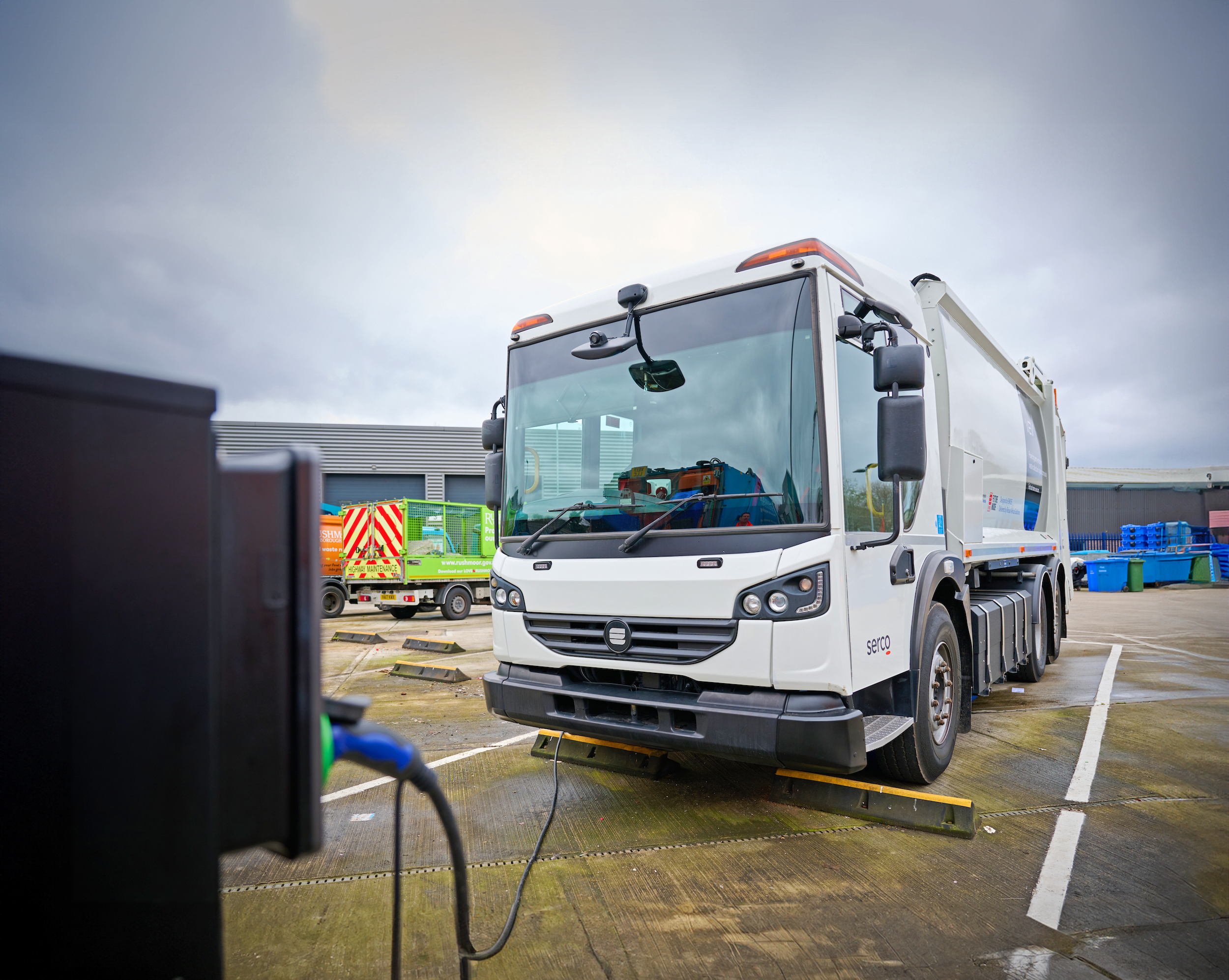
For any commercial EV fleet, infrastructure is already central to performance. Vehicles need to be charged, dispatched, maintained and monitored around the clock. Depots need enough electrical capacity, chargers need to be available whenever vehicles return, and energy needs to be bought and used intelligently. This becomes even more critical for autonomous fleets, where operations are no longer constrained by driver hours and vehicles may be expected to run 24/7, 365 days a year.
With autonomous fleets, the margin for error becomes even smaller.
A conventional fleet can sometimes work around disruption manually. A driver can move a vehicle, a depot team can reshuffle charging, or a manager can make a quick decision when something unexpected happens.
Autonomous operations cannot rely on that same level of ad hoc human intervention. Charging windows, vehicle readiness, site load and route availability all need to be planned and orchestrated much more precisely. If one vehicle misses its charging slot, the knock-on effect could be a missed shift, a delayed route or a service failure.
That means the commercial bottleneck for autonomous fleets may not be vehicle capability alone. It may be whether the surrounding infrastructure is intelligent enough to support continuous, reliable operation.
Why autonomy raises the bar for fleet operators
Higher utilisation is one of the biggest promises of autonomous vehicles. If a vehicle can operate for longer hours with less downtime, the operator can, in theory, get more value from the same asset.
But higher utilisation also means there is less room for infrastructure failure.
If a fleet is expected to run for longer, charge more predictably and return to service faster, the operator needs confidence in every part of the system. That includes depot readiness, charger availability, grid capacity, load management, energy procurement, maintenance support, live operational visibility and multi-site control.
In other words, autonomy does not remove the need for operational planning. It increases it.
The more automated the fleet becomes, the more important it is that the infrastructure around it is designed, built and managed as part of the operating model from day one.
Intelligent charging and energy management become the control layer
This is where intelligent ifrastructure becomes essential.
For autonomous fleets to scale, operators need more than chargers in the ground. They need a control layer that gives them visibility, security and reliability across vehicles, chargers, depots and power demand.
That control layer needs to help operators answer practical questions in real time. Which vehicles are ready for their next shift? Which chargers are available? Where is load being constrained? Can charging be shifted away from peak tariffs? Will every vehicle be ready when it needs to leave the depot? Which sites are under pressure, and where is disruption likely to happen before it affects service?
VEV IQ is positioned to address this challenge for commercial EV fleets. It supports fleet readiness, charger reliability and load control, helping operators reduce disruption and avoid missed shifts. VEV IQ supports 200+ charger models, has managed 1,000,000+ charging sessions and is built specifically for commercial EV fleet environments.
For autonomous fleets, that kind of visibility and control becomes even more valuable. It helps shift infrastructure from being a passive asset in the background to an active operating system for the fleet.
13 May, 2026
The grid and depot challenge
Autonomous fleet scale will also intensify the grid and depot challenge.
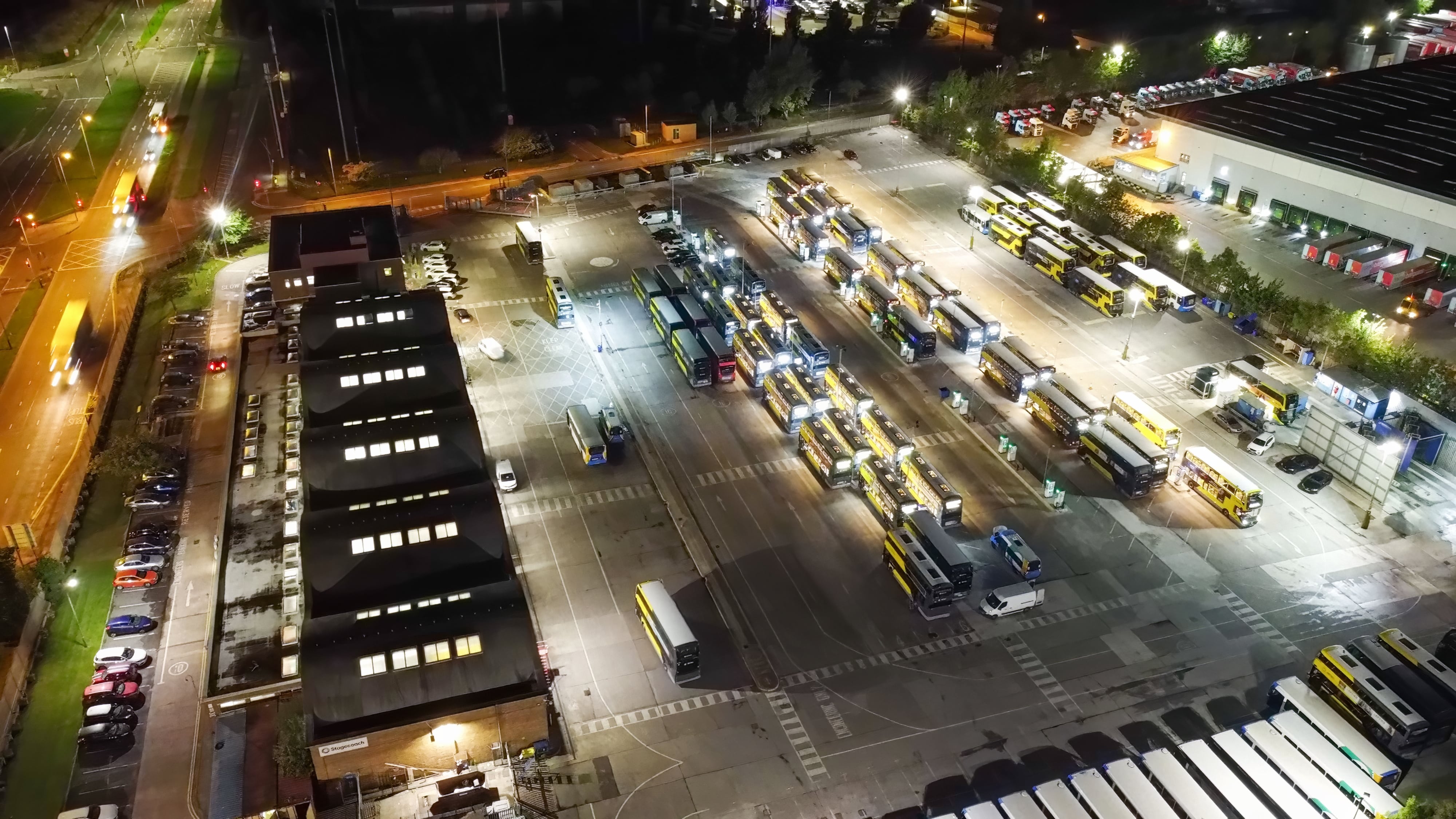
As fleets electrify and automate, more power will be needed at concentrated locations. Depots will no longer be simple parking or storage facilities; they will increasingly become energy hubs, dispatch centres and operational control points.
That creates a new set of questions for operators.
- Is there enough power available at the site?
- Can the grid connection support future fleet growth?
- How should charging be phased as demand increases?
- What happens when multiple vehicles need to charge at the same time?
- How can operators keep energy costs under control while maintaining uptime and reliability?
- How can onsite renewables and battery energy storage be used to improve resilience, reduce costs and support fleet growth?
This is why infrastructure planning needs to happen much earlier in the process. In many cases, grid capacity, depot design and charging strategy could become bigger constraints than the vehicles themselves.
It is also why the industry is placing more emphasis on integrated infrastructure delivery, bringing together energy strategy, charging infrastructure, grid connections and operational management rather than treating them as separate workstreams.
For autonomous fleets, grid connection and depot design are no longer one-off engineering tasks. They are becoming a core part of the commercial operating model.
A global signal: autonomy is becoming infrastructure
The shift is already visible in the market. Autonomous fleets are no longer confined to small pilots or closed test environments. They are beginning to expand into commercial operations, new cities and more demanding use cases.
In passenger transport, companies such as Waymo are preparing to bring robotaxi services to London, its first European market, while Uber is working with partners including Wayve to launch autonomous ride-hailing trials in the UK and expand driverless services across multiple markets.
The same momentum is building in freight. Aurora has launched commercial driverless truck operations in Texas, with Uber Freight and Hirschbach among its early customers, while Einride continues to scale its electric and autonomous freight model across multiple markets. Torc Robotics, backed by Daimler Truck, is also moving through productisation and hub-based testing as it works towards commercial autonomous trucking.
These examples point to a broader shift: autonomous fleets are starting to move from demonstration to deployment. As they scale, the limiting factor will not only be vehicle technology. Operators will also need the infrastructure, depot capacity, grid connections, charging systems and operational resilience to keep these fleets running reliably.
The operators who plan infrastructure early will move faster
The early autonomy debate has rightly focused on proving the technology. But as fleets move closer to deployment, the question changes: not just whether the vehicle can operate, but whether the whole fleet system can support it reliably every day.
But the next phase will be much more operational.
Can it charge reliably? Can it meet the next shift? Can the depot support the duty cycle? Can the operator control energy cost? Can multiple sites be managed consistently? Can disruption be predicted before it affects service?
These are the questions that will determine whether autonomous fleets can move from pilot projects to commercial scale.
The winners will be the operators who build the charging, energy, depot, software and support infrastructure around autonomy from day one.
Autonomous fleets need intelligent infrastructure. Without it, the promise of higher utilisation could quickly become a new source of operational risk.
With it, autonomy becomes far more than a vehicle upgrade. It becomes a more reliable, more efficient and more scalable fleet operating model.