

By Sean O’Sullivan, Senior Business Development Officer, Bus and Coach
Quick Summary
- Electric buses don’t just cut emissions – they make bus travel feel easier and less tiring.
- Smoother, gearless acceleration reduces the “lurch” and creates a “glide” effect.
- Quieter cabins lower stress and make conversation/announcements clearer.
- Cleaner air + modern interiors help ridership, but good driving/training is key to avoid jerkiness.
Electric buses are not only a climate upgrade – they’re a day-to-day comfort and customer experience upgrade
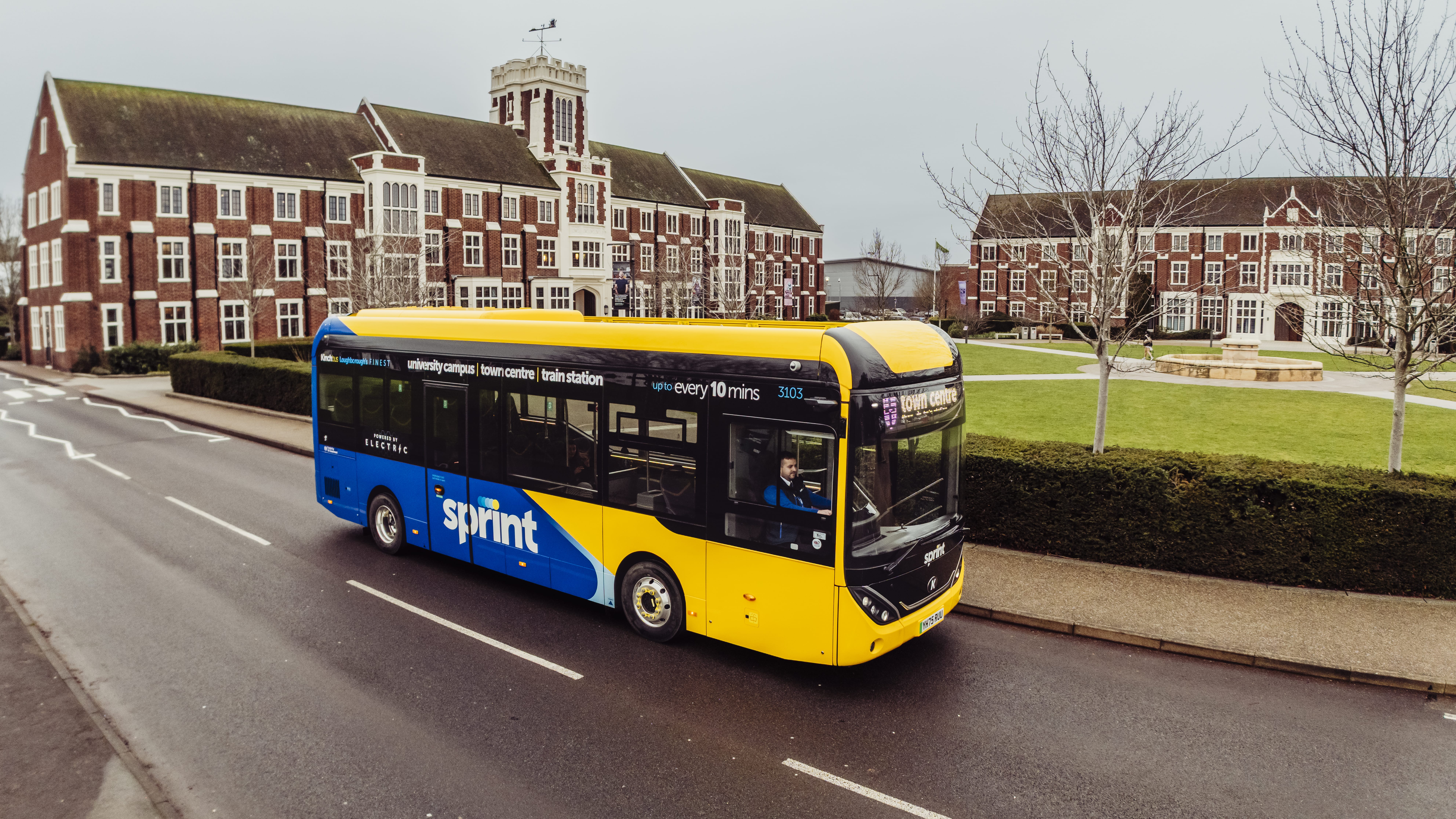
Picture this: you’ve just made it to the bus in time. You’re warm, overstimulated, and then the vehicle pulls away with a sudden lurch that leaves you momentarily unsteady. Once seated, the repeated stop-start rhythm through the city-paired with the constant rumble of a diesel engine-adds to the sense of fatigue.
The shift to zero-emission fleets is usually discussed in terms of carbon reduction and improved air quality (and rightly so). But there is another benefit that affects passengers every day: comfort.
Comfort is not a “nice-to-have” in public transport. It is what turns “I’ll take the bus if I have to” into “the bus is an easy choice.” Electric buses have a particular advantage here because they change how the journey feels-from the moment the doors close to the moment passengers step off.
The “glide” effect: why electric acceleration feels different
One of the most common observations about electric buses is how they move. In conventional diesel buses, power delivery can feel uneven-especially when pulling away from stops or creeping through congestion. That sensation often comes when the gearbox electronic control unit is desperately trying to match the correct gear with engine speed and load under constantly changing driver inputs, which can translate into a noticeable “lurch.”
Electric buses operate differently. Electric motors deliver torque smoothly, without gear changes, and with more precise control at low speeds. In practice, that often produces a ride that passengers describe as calmer and more consistent-less like being pulled forward and more like being carried along.
A UK report from 2023 (IPPR’s A smooth ride) captures this clearly: passengers report a “smoother, quieter” experience and describe electric vehicles as “gliding” compared with diesel buses that can “lurch” when moving off.
Quiet is a comfort feature, not a bonus
Noise is one of the most underestimated contributors to passenger stress-often only noticed when it disappears.
Electric buses are significantly quieter at low speeds, which matters because low-speed operation is where buses spend much of their time in cities: pulling away, slowing down, idling in queues, and arriving at stops. Reduced engine noise changes the experience inside the vehicle.
Conversations are easier, announcements are clearer, and the overall cabin environment feels more relaxed.
Passenger research supports this. A UK passenger experience study published in 2024 (UWE Bristol, based on the Mi-Link trials) found that 72% of respondents rated the electric minibus quieter than a normal bus. That is not a marginal preference-it suggests quietness is one of the most immediate and widely felt differences.
There is also a secondary effect: reduced noise and vibration can make the ride feel smoother overall. When the background “rumble” is removed, passengers often perceive the motion of the vehicle as more controlled and less fatiguing.
Cleaner air improves comfort in the most literal sense
Comfort is not only about seating, suspension, or interior design. It is also about how passengers feel physically during and after a journey.
In dense urban areas, the air-quality benefits of electric buses matter not just for the city overall, but for people waiting at stops, boarding, and travelling – particularly at curb level where exhaust is most noticeable. Less exposure to fumes can make stops feel more pleasant and reduce discomfort for passengers with asthma or other respiratory sensitivities.
Perception plays a role too. A user finding referenced by UITP (from Paris’s operator RATP) reports that 92% of electric bus users believe electric buses contribute to better air quality. Even when a discussion is not centred on emissions, this perception matters because it shapes whether passengers feel good about choosing the bus.
There is also a psychological dimension: investing in modern, cleaner technology can signal care, quality, and progress – strengthening trust in the service.
Comfort is not only the vehicle – it is also how it is driven
A more credible view recognises that electrification does not automatically guarantee a smooth ride in every instance. Electric drivetrains create the conditions for improved comfort, but driving style, route layout, and operating conditions still influence what passengers experience.
The same 2024 passenger study found mixed perceptions of “smoothness”: 28% described electric buses as smoother, while 23% described them as jerkier. This is useful evidence because it highlights a practical lever operators can pull. Electric acceleration is responsive – an advantage – but without appropriate driving techniques it can feel abrupt.
The positive takeaway is that this is largely solvable. Driver training, consistent pacing between stops, and operational tuning can help services realise the comfort potential passengers already associate with electric buses. In other words, the vehicle can be upgraded – and the service can be upgraded to match.
The “new bus effect”: improvements passengers notice immediately
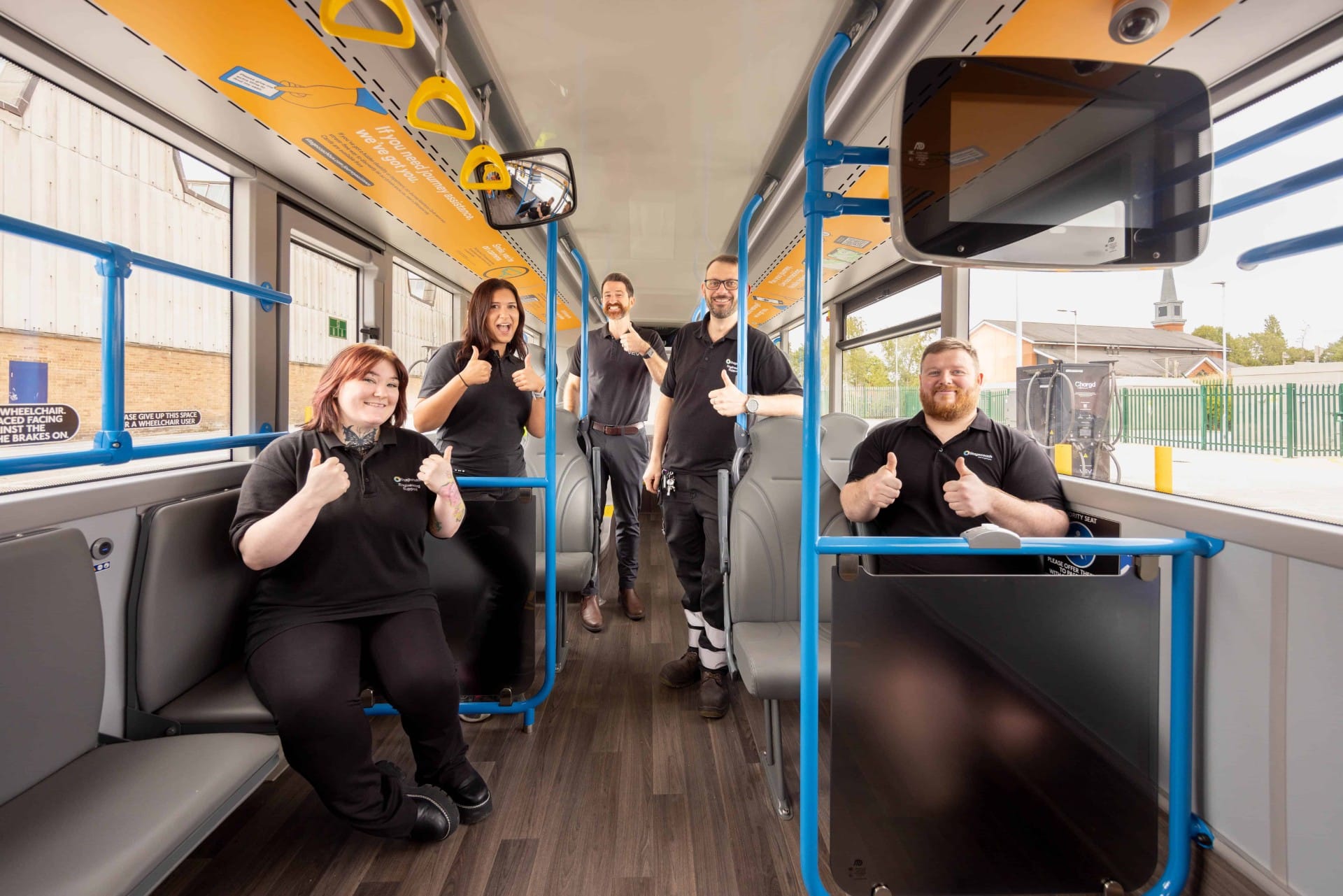
Electric buses often arrive as part of broader fleet modernisation, and passengers notice those changes as well. IPPR’s 2023 report notes that riders appreciate “new vehicle” benefits that frequently accompany electrification programmes, such as improved interiors, USB charging points, and more welcoming layouts.
However the most desirable difference is usually the climate control. This not only benefits the saloon area for the passengers, but also the cab area for the driver, a happier driver means a better customer experience, better customer service and a more relaxed driving experience.
Even when those features are not unique to electrification, they become part of the “electric bus” experience in passengers’ minds. When a bus is quieter, smoother, cleaner, has a climate controlled environment, equipped with modern touches and meets the latest DDA requirements, the improvement feels tangible – not merely technical.
Comfort is cumulative. A slightly smoother pull-away, a calmer cabin, cleaner air at stops, and a better interior combine into a journey that simply feels better.
Why comfort matters for ridership
Comfort influences choice. If the experience is more pleasant and less stressful, people are more willing to use the service again – and more willing to choose it over other options.
The UK Department for Transport’s National Travel Attitudes Study (published 2024, surveying in 2023) found that 37% of people said they would be more likely to travel by bus if a zero-emission bus was available. Passengers may not explicitly cite “smooth acceleration” as their primary reason, but comfort is often what sits underneath: the service feels more modern, more appealing, and easier to use.
For broader context, Transport Focus’s Your Bus Journey results (published 2025, based on large-scale passenger feedback) show overall satisfaction improving. Comfort upgrades that reduce stress and improve day-to-day experience are precisely the kinds of changes that contribute to those satisfaction gains.
Takeaway: electric buses make the bus feel like the easier choice
Electric buses are a climate solution, but they are also a customer experience upgrade. They can make journeys smoother, quieter, and cleaner in ways passengers notice immediately. When passengers notice, they are more likely to feel positively about the service – and more likely to use it again.
If the goal is happier riders and stronger ridership, comfort is not a side benefit. It is a core feature.
A smoother route is not only about traffic conditions. It is about how the journey feels. And electric buses-paired with good driving practice and thoughtful operations – are one of the most direct ways to make the bus feel like the easy, comfortable choice.
If you want to give your passengers a comfort upgrade, then email me, or get in touch with VEV.
18 February, 2026