


By Mike Brown, VP Product
If you run heavy goods vehicles, you’ve probably heard the worry: “Won’t the batteries fade too fast?” The latest evidence suggests otherwise, and that’s great news for uptime, total cost of ownership (TCO), and residuals.
Below is a clear, HGV-centric view of what really drives battery ageing, how quickly it happens in practice, and the levers fleets can pull to keep packs healthy for the long haul.
Modern Batteries Age Slowly
Large real-world datasets now show that EV batteries typically lose 1-2% of their capacity per year. Geotab’s 2024 analysis of 5,000 EVs (1.5 million days of data) found an average 1.8% per year degradation and noted that;
newer models are improving enough that most batteries will outlast the usable life of the vehicle.
Crucially for fleet duty, high-use vehicles in the dataset did not degrade faster.
Independent UK-facing coverage echoes the point, while consumer research from Which? – useful as a proxy for van/light-duty patterns – finds about 1% range loss per year. The direction of travel is consistent: batteries are ageing more slowly than many assume.
A 2024 Stanford/SLAC study helps explain why: real-world stop-go driving and rest periods are gentler on cells than constant laboratory cycling, extending life by roughly 30-40% versus standard test protocols. In other words, everyday duty cycles aren’t as punishing as old lab models suggested.
HGV-Specific Reality: Engineered for Longevity
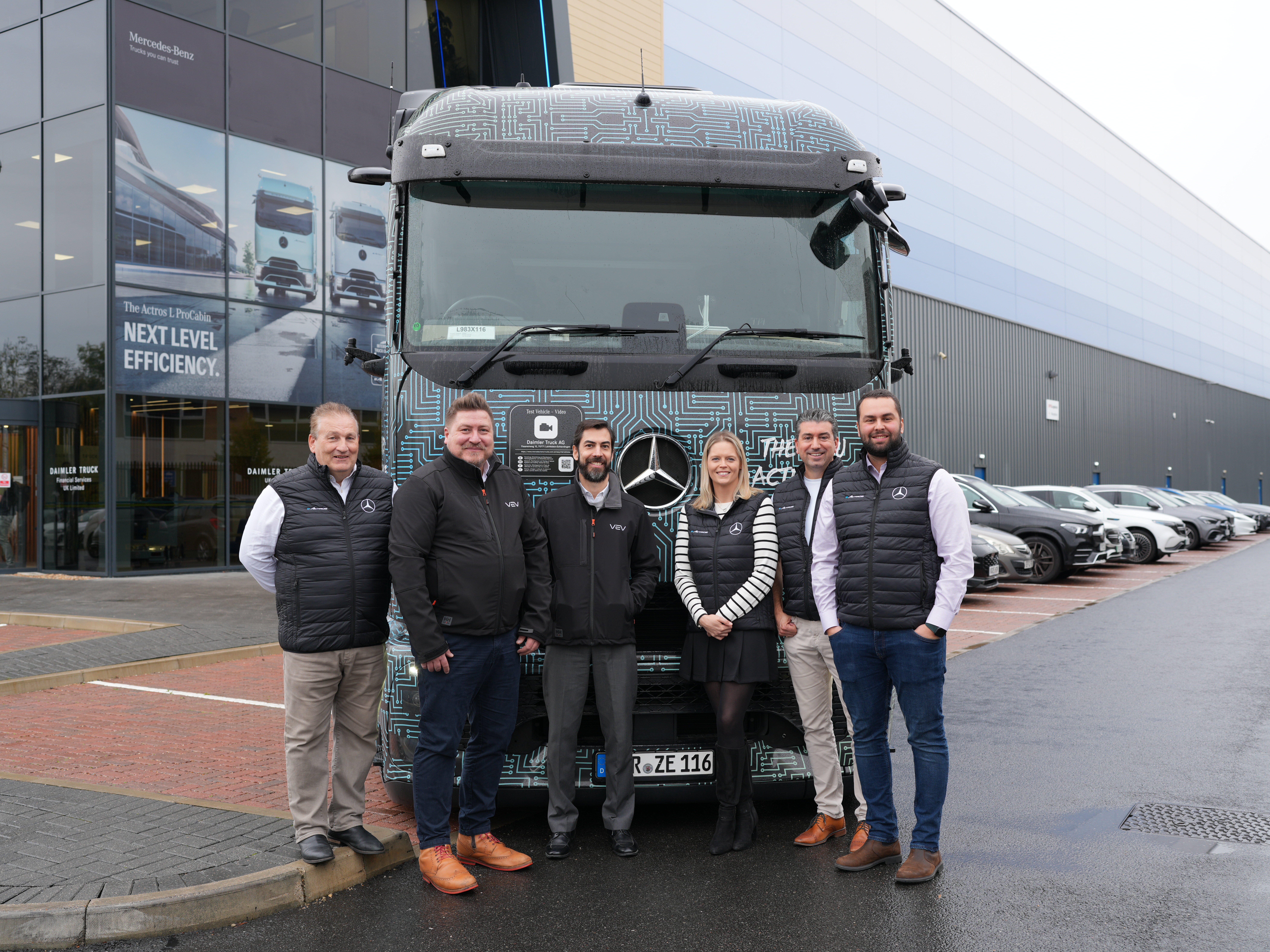
HGV fleets aren’t converging on a single battery chemistry – instead, a pragmatic mix is emerging. LFP (lithium iron phosphate batteries) is gaining ground for its cost, durability, and stability, with DAF openly adopting LFP packs and Daimler Trucks Mercedes-Benz eActros 600 built around the chemistry. The eActros is engineered to meet diesel-like durability targets of roughly a decade and 1.2 million km, while LFP’s wide usable energy window reduces daily cell stress and supports long service life. Daimler Truck is also backing its LFP strategy through investment in a dedicated cell joint venture for commercial vehicles. In parallel, Volvo leans on NCA and Scania on Northvolt’s NCM (nickel cobalt manganese) cells to maximise energy density and duty-cycle range. Northvolt/Scania’s pack is validated for around 1.5 million km, effectively truck-lifetime performance. Looking ahead, battery specs may diverge by use case: value-led entry trucks will likely favour robust, cost-effective LFP, while long-range or performance-oriented variants continue to adopt higher-energy chemistries.
What Really Wears Batteries and How to Manage It
Three factors dominate battery ageing in heavy-duty:
1) Energy throughput & depth of discharge (DoD). More kWh cycled daily, and frequent deep cycles add wear. Evidence from high-utilisation E-bus fleets (the closest parallel to urban/regional HGVs) shows operators that cycled hard and deep tended to reach replacement windows sooner; newer specs and smarter operations are stretching that interval.
2) Power (C-rate) and fast charging. Repeated high-power charging/discharging elevates cell temperature and stress. The nuance: fast charging is manageable when temperature-controlled and not overused. NREL’s work underscores that higher currents raise ageing risk but also shows the pathway-thermal management and optimised profiles to keep lifelong while enabling operational speed.
3) Temperature. Heat accelerates degradation; cold’s effect is largely temporary on range. That’s why active cooling/heating and pre-conditioning are standard on modern e-trucks- and why charging a very hot pack is throttled by the BMS to protect life.
The Good News: Innovation is Reducing Ageing Further
- Chemistry fit-for-purpose. LFP’s inherent stability and long cycle life make them ideal for many HGV use cases (return-to-base, predictable duty cycles), while other chemistries serve long-haul energy density needs. OEMs (original equipment manufacturers) are increasingly matching chemistry to duty, rather than one-size-fits-all.
- Smarter Battery Management. Next-gen, cell-level control stops a weak cell from dragging down the pack. Brill Power reports up to 60% life extension with patented active balancing – technology that’s moving from stationary applications into transport platforms.
- Megawatt Charging (MCS 2.0) is built to deliver extremely fast charging for heavy-duty vehicles while protecting battery health. The standard sets strict temperature limits on connectors and uses sensors to ensure both the cable and vehicle contacts stay within safe bounds. The vehicle is responsible for keeping its battery within its operating range, while the charger manages heat in its own cable and connector. This coordination means charging power adapts to actual conditions rather than pushing the battery beyond its limits. Active cooling is expected at very high currents, and the system has been validated for continuous operation at up to 3,000 amps, showing it’s designed for sustained, managed charging rather than uncontrolled peaks. Control is handled through ISO 15118-20, where the truck itself requests the current, which it can safely accept based on temperature and state of health. This approach gives fleets the benefit of megawatt-level charging speeds while ensuring long-term battery reliability.
Practical Playbook for Fleet Managers
1) Spec to your routes, not brochure range. Use telematics (payloads, gradients, dwell times) to right-size packs. Oversizing is cost and weight; under sizing drives deep cycling. Tools and OEM calculators make it straightforward to align energy to duty cycle. (E-bus operations show that right-sizing and planning “charge-whenever-possible” can materially reduce DoD and wear.)
2) Make charging a health policy. Default to depot AC/DC charging that brings packs to 80-90%, reserve 100% for days you truly need it, and avoid leaving vehicles parked full. Keep packs cool before/after high-power sessions and let the BMS do its job. NREL’s guidance and models reinforce that aging-aware charging preserves life without sacrificing availability.
3) Ask About Chemistry and BMS – not just kWh. An LFP option plus advanced cell-level management is a strong combo for many HGV cycles; if you’re long-haul constrained, ensure the OEM’s thermal/BMS (battery management system) strategy is set up to protect life under sustained high power.
4) Don’t fear winter. Manage heat. Focus longevity efforts on heat: airflow to battery bays, software limits on charging when hot, and cooling at depots after fast turns.
5) Plan lifecycle, not just purchase. With million-kilometre class designs and cell-level management, many packs will serve for the life of the truck. If your utilisation is extreme, model mid-life refresh options up front (and second life/recycling paths) to keep TCO predictable.
Bottom line
Battery degradation is real but slow, and it’s increasingly well-managed in heavy-duty platforms. Field data shows 1-2% per year capacity fade; HGV-specific designs (LFP packs, robust thermal systems) and smarter BMS/charging keep ageing in check, even under demanding duty cycles. For most fleets, the pack will outlast the asset.
Far from being a barrier, battery health is becoming a confidence factor for electrifying HGVs at scale.
To find out more, contact us at ask@vev.com
Sources
2024 Battery Degradation Update | Geotab
Data from Geotab highlights how EV batteries can last over 20 years – Transport + Energy
Northvolt, Scania develop NCM battery for heavy EV trucks – Fastmarkets
(PDF) Impact of Charging Rates on Electric Vehicle Battery Life
Seven common myths about electric truck batteries
October 2025